
Tamarind (Tamarix)

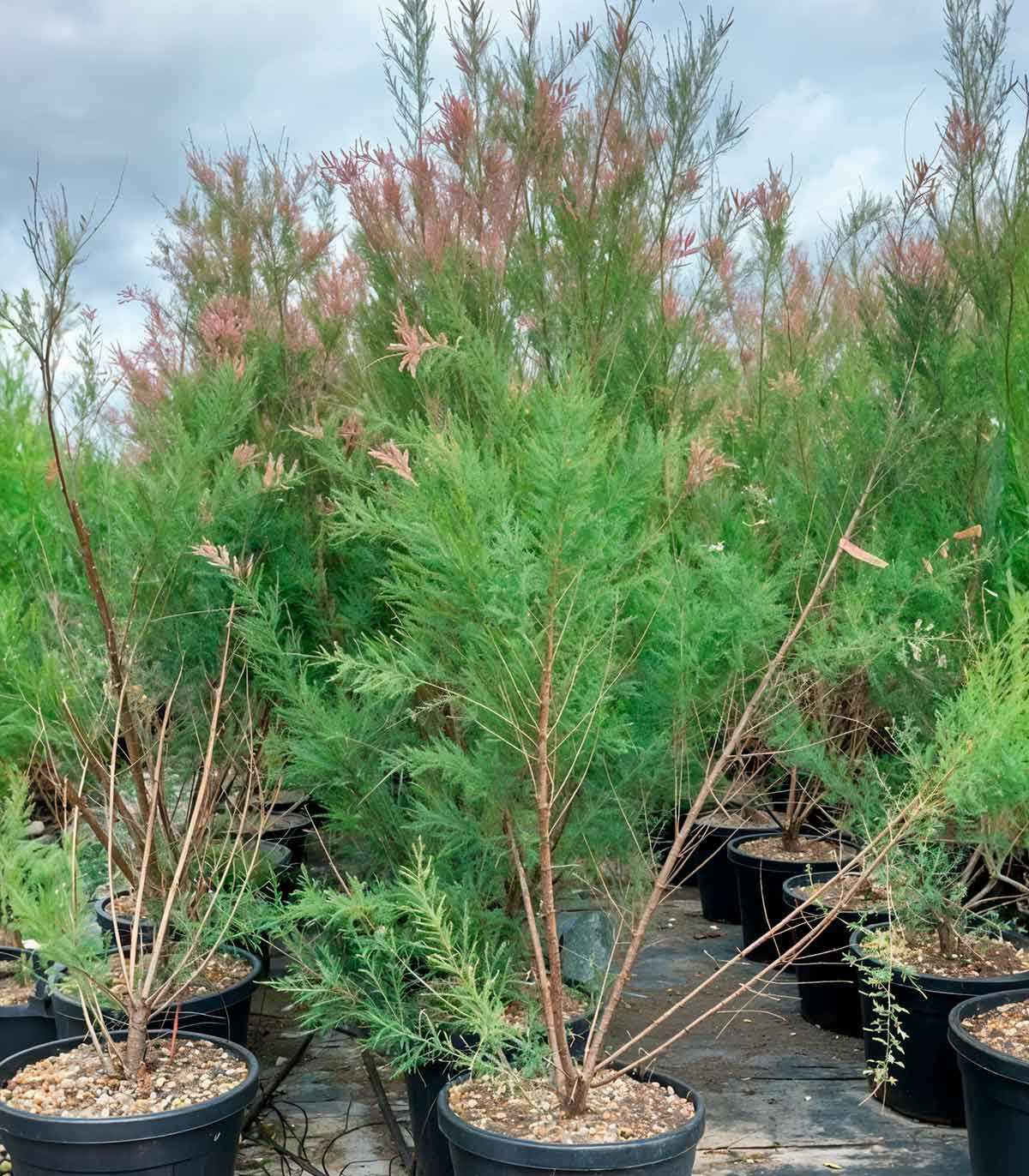
The tamarisk, also known as tamarisk, is the perfect choice for your garden. With its delicate flowers and ability to adapt to extreme conditions, this species has earned a prominent place in the world of gardening.

Read moreShow less
€27.50 (tax incl.)
Reference:
Description

Looking for an ornamental plant that combines elegance and hardiness? The tamarisk, also known as tamarisk, is the perfect choice for your garden. With its delicate flowers and ability to adapt to extreme conditions, this species has earned a prominent place in the world of gardening.

Features of the Tamarix

Tamarix is a genus of plants comprising several species, all characterized by their shrubby or tree-like form. Their small, scaly leaves are densely arranged on the branches, creating a delicate, feathery foliage. However, the most striking feature of this plant is its flowers. Small but numerous, they are grouped in spikes of pink, white, or cream, creating a visual spectacle during flowering.

Adaptability to different climates: One of the most outstanding characteristics of the Tamarix is its great adaptability. It tolerates saline, sandy, and nutrient-poor soils, making it an excellent choice for coastal gardens or areas with arid climates. Furthermore, it is drought-resistant and withstands high temperatures, making it a very hardy and low-maintenance plant.

Tamarisk Care

  • Location: Tamarix prefers a sunny location for abundant flowering. However, it also tolerates partial shade.
  • Soil: It adapts to all types of soil, although it prefers well-drained soil.
  • Watering: This plant is drought-resistant and does not require frequent watering. However, during prolonged periods of drought, moderate watering is recommended.
  • Pruning: Pruning is mainly done to shape the plant and remove dry or damaged branches.
  • Fertilizing: It does not require frequent fertilization. An application of organic fertilizer in spring may be sufficient.

Uses of Tamarinx

  • Gardening: Tamarisk is widely used in gardening as an ornamental plant. Its elegant form and abundant flowering make it a highly valued species for creating hedges, shrub borders, or as a standalone specimen.
  • Environmental restoration: Due to its ability to grow in saline and sandy soils, Tamarix is used in environmental restoration projects to stabilize dunes and prevent erosion.
Read moreShow less
Product Details
Reviews
No comments
Comments (0)
Customers who bought this product also bought:
€53.90 (tax incl.)

Native to Mexico and Guatemala, the Beaucarnea, also known as elephant's foot, is perfectly adapted to hot, dry climates. Its main characteristic is its robust trunk, similar to an elephant's foot, which stores water. Long, slender, deep green leaves sprout from the top of the trunk, creating an elegant contrast.

Pot: 10L / 70-90 cm

Various sizes
€133.10 (tax incl.)

The Washingtonia, native to Mexico, is a fast-growing palm with a tall, column-shaped trunk that is reddish-brown at first and gray with age, crowned by beautiful, bright green, fan-shaped leaves.

Various sizes
€53.90 (tax incl.)

The Strelitzia reginae, or Bird of Paradise, is a plant native to South Africa. It has large, dark green, leathery, oblong leaves with long petioles. These are arranged in two rows, forming a fan-shaped crown. Its exotic and striking flowers are a deep orange with a bright blue base. They are shaped like a bird's beak, with three sepals and three petals. They appear in spikes of up to six flowers.

Various sizes
€24.20 (tax incl.)

The Washingtonia, native to Mexico, is a fast-growing palm with a tall, column-shaped trunk that is reddish-brown at first and gray with age, crowned by beautiful, bright green, fan-shaped leaves.

You may also like
No items
Menu
Settings