


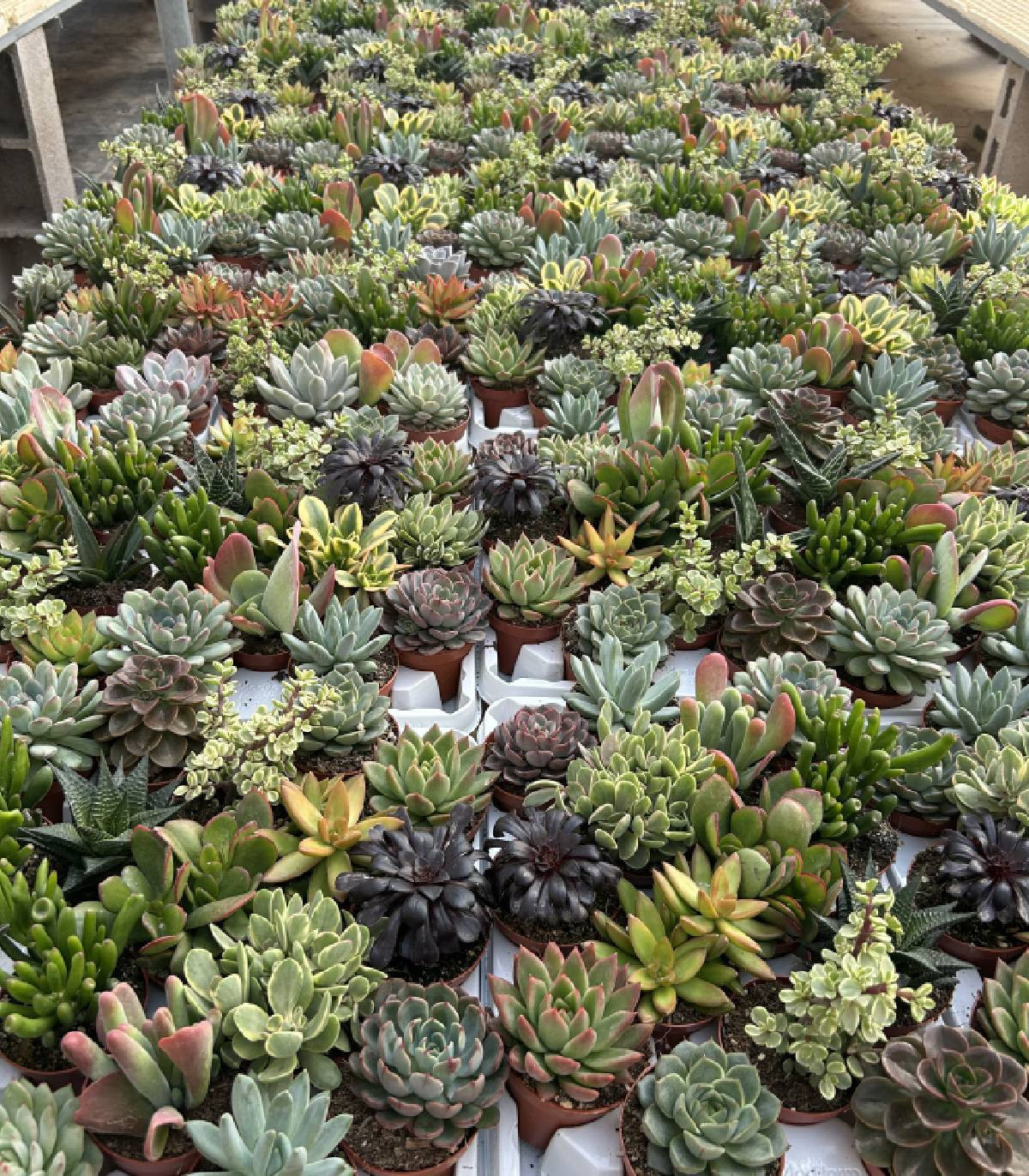
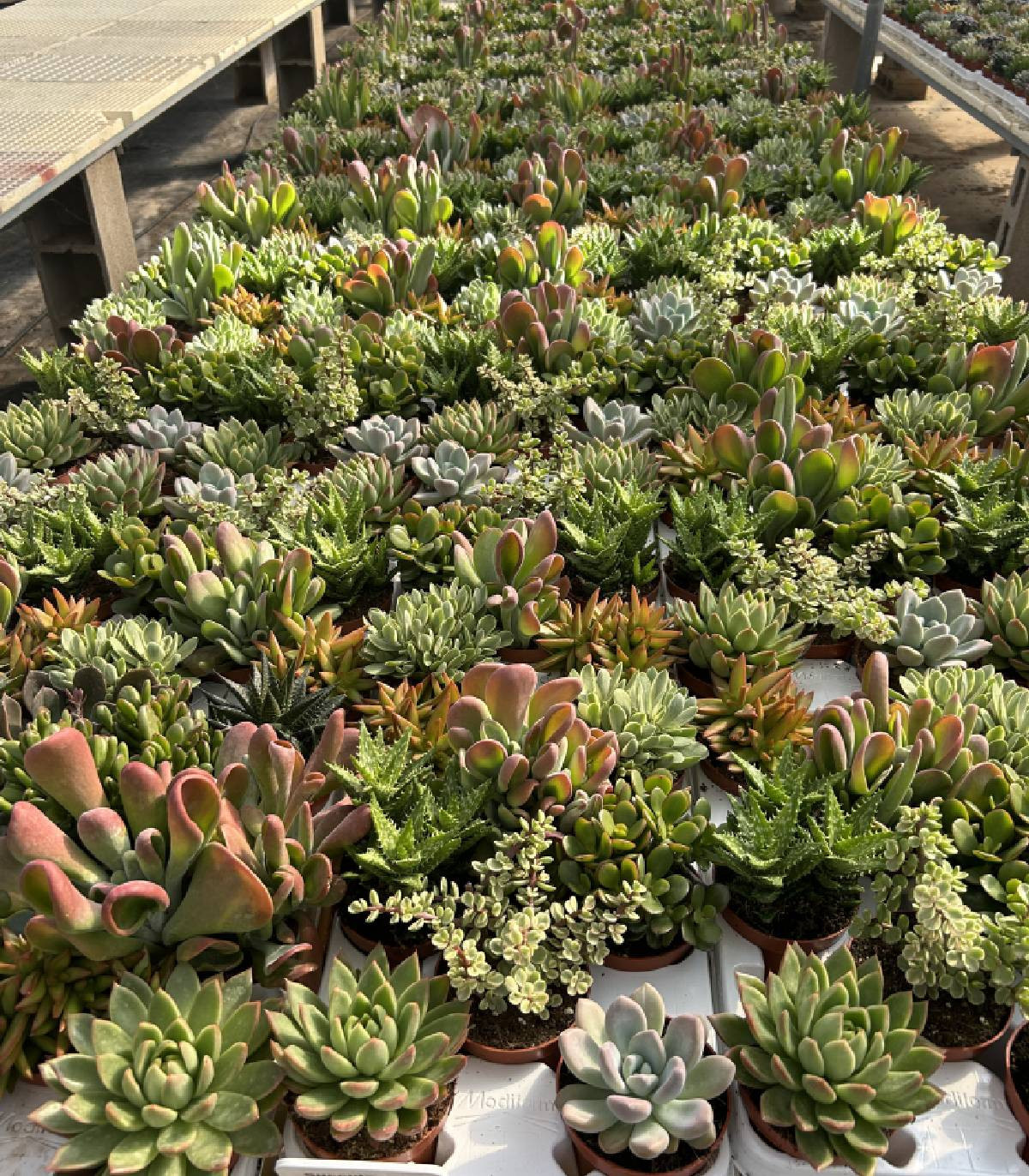


Variety of Succulents and Cactus
Various sizes
Small succulents and cacti are an excellent choice for those seeking hardy, low-maintenance plants with a decorative touch for both indoors and outdoors. Their ability to survive in extreme conditions has made them a popular choice among gardeners and decorators.
€8.80
(tax incl.)
Reference:
Characteristics of small succulents and cacti
- Leaves: Succulents have thick, fleshy leaves, while cacti typically have modified stems that store water. Many cacti also have spines, which are an adaptation to prevent water loss.
- Flowers: Their flowers are usually large, colorful and showy, often very attractive to pollinators.
- Fruits: Some cacti produce edible fruits, such as the prickly pear, while succulents usually generate seeds within capsules or similar structures.
- Size: They vary in size, from small plants that grow in pots to species that can reach large dimensions in their natural habitat.
Benefits of growing small succulents and cacti
- Resistance: They are very resistant to drought, extreme heat and poor soils, making them ideal for low maintenance gardens.
- Low maintenance: They require little water and care, making them perfect plants for people with little time or in areas with warm climates.
- Decorative: Their unique shape and vibrant colors make them ideal for creating focal points in gardens, terraces or interiors.
- Adaptability: They adapt well both indoors and outdoors, in pots or on the ground, and are perfect for modern and minimalist garden decorations.
Caring for small succulents and cacti
Although they are hardy plants, they require some basic care to stay healthy.
- Location: They prefer sunny spots, although cacti can tolerate partial shade. It's important that they receive enough light to stay strong and healthy.
- Soil: They need well-drained soil, especially cacti, which do not tolerate excess moisture.
- Watering: They are very drought tolerant. They should be watered moderately, ensuring that the soil dries out completely between waterings to prevent root rot.
- Pruning: They don't require much pruning, but it is advisable to remove dead or damaged parts to promote healthy growth.
- Pests and diseases: They are resistant to many pests, but can be susceptible to mealybugs or mites, so it is important to monitor them regularly.