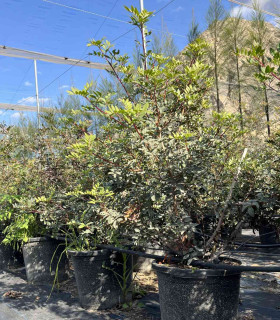
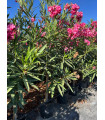


The olive tree is much more than a fruit tree. It is a symbol of longevity, wisdom, and peace, capable of beautifying any outdoor space with its majestic stature and evergreen foliage. Its rounded and well-defined crown makes it a focal point in gardens, patios, and terraces, adding a timeless Mediterranean touch.
The Agave is a genus of succulent plant, native mainly to the warm regions of Mexico and the southern states of the United States, now adapted to the Mediterranean zone.
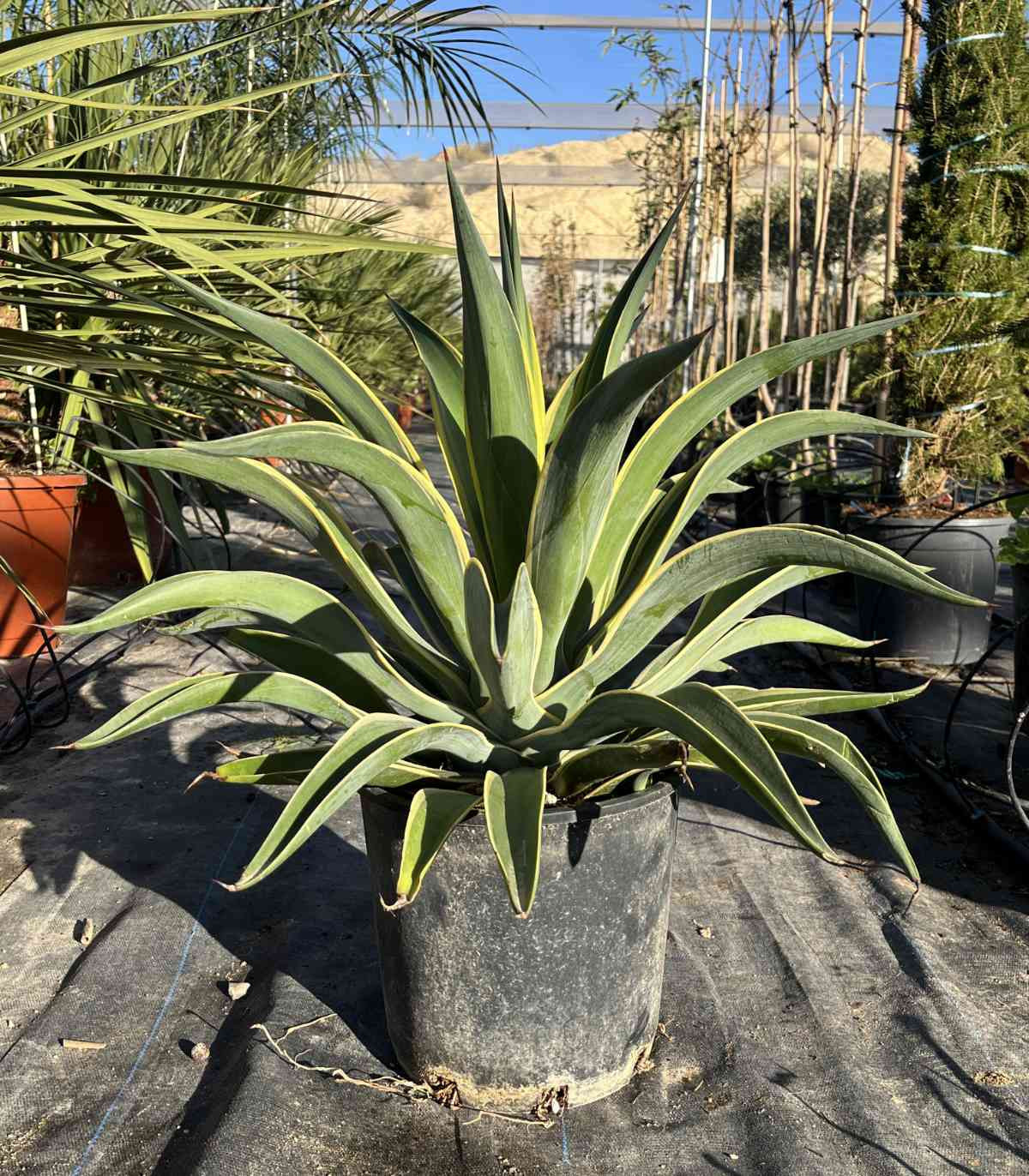
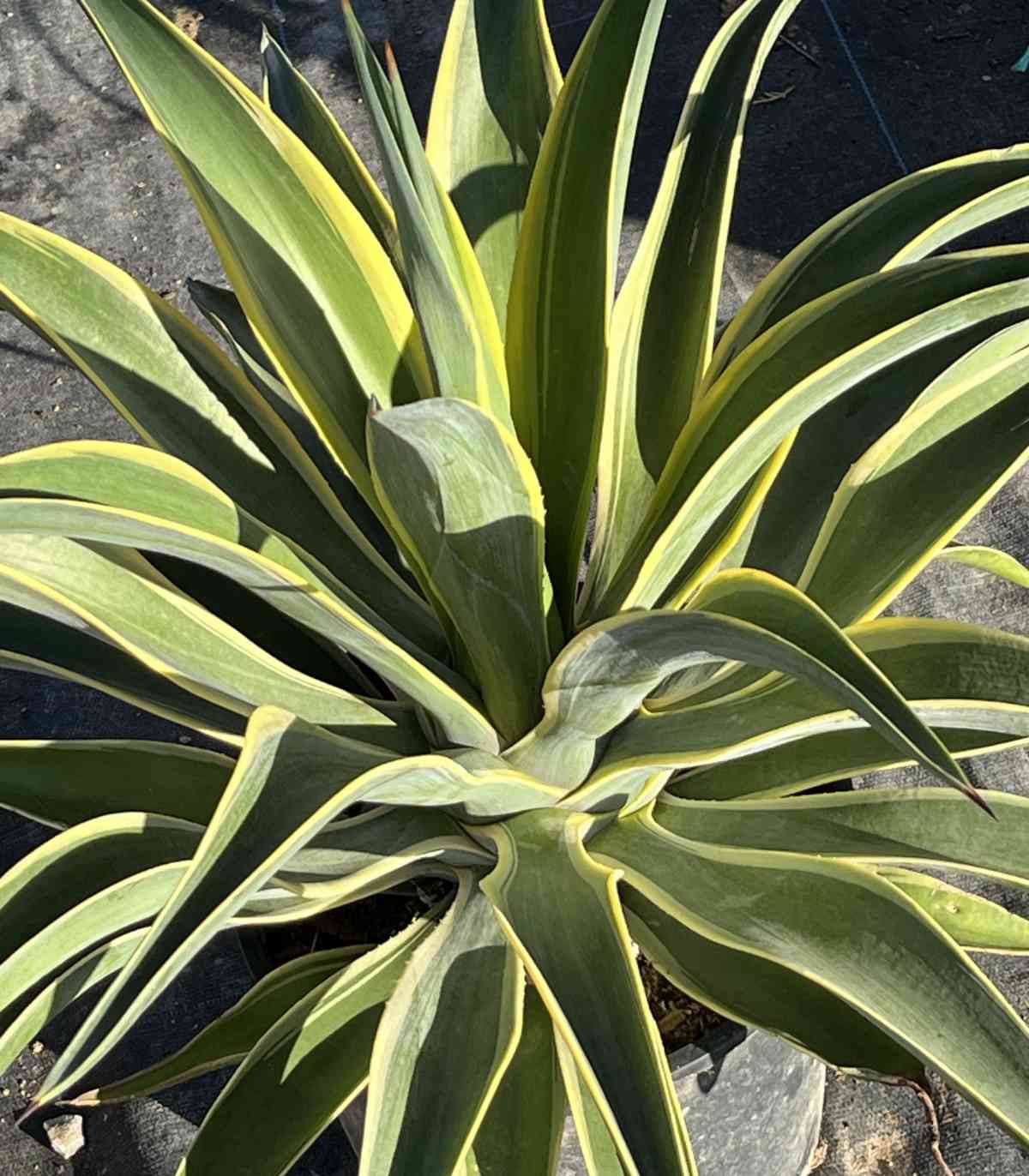
Agave is a genus of succulent plant, native primarily to the warm regions of Mexico and the southern United States, and now adapted to the Mediterranean climate. Its leaves are arranged in a circular, fleshy shape, ending in a spine and often with serrated edges. After many years, they produce inflorescences of pale yellow, bell-shaped flowers at the tips of very tall peduncles. It is very resistant to seawater salinity.
The Agave is characterized by developing a small trunk, thus taking on a tree-like shape. It has pale green leaves with spineless edges. Large and picturesque, it has a curved stem and yellow inflorescences in mature plants.
Physiological and cultivation characteristics:
It can reach a height of 1.80 to 2 meters and a width of 2 to 3 meters.
- It belongs to rusticity zone 9.
- It is fast-growing.
- It must be in an area exposed to full sun.
- Suitable for small gardens.
- It can be grown in pots, planters and flower boxes to decorate terraces, balconies, etc.
- It can be planted individually but is also suitable for forming groups (more plants of the same variety).
- Sea resistant.