


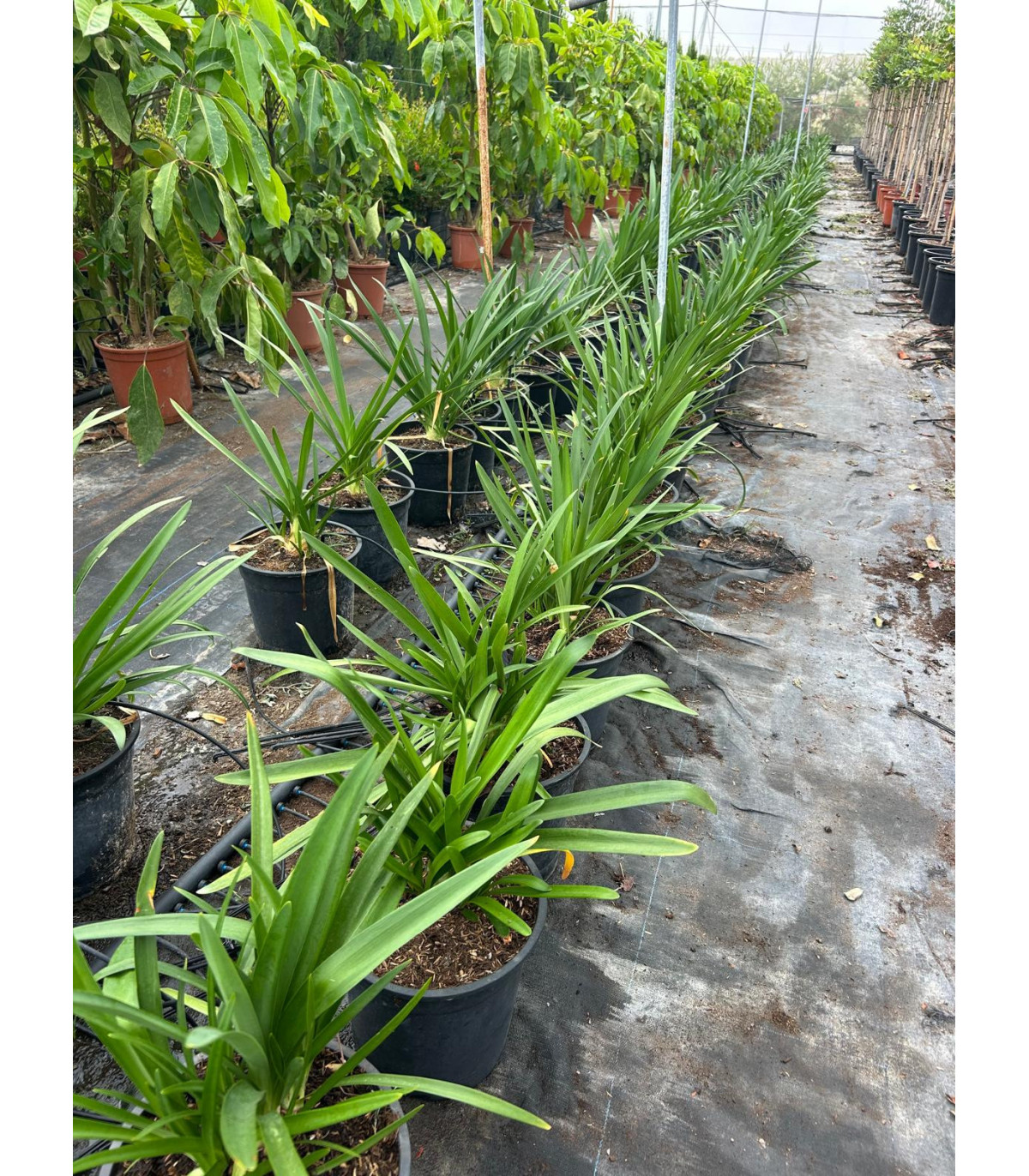

Blue Agapanthus

The blue Agapanthus, also known as the African lily, is the perfect choice. Native to South Africa, this beautiful specimen stands out for its striking blue flowers clustered in umbels, which bloom during the summer and early autumn.
Pot: 6L/ 40-60 cm
Looking for a perennial to add a touch of elegance and color to your garden? The blue Agapanthus, also known as the African lily, is the perfect choice. Native to South Africa, this beautiful plant is distinguished by its striking blue flowers clustered in umbels, which bloom throughout the summer and early autumn.
Characteristics of the Blue Agapanthus
Agapanthus is a bulbous plant that forms dense clumps of long, narrow, deep green leaves. Its trumpet-shaped flowers are grouped in spherical inflorescences that can reach up to 20 cm in diameter. The blue color of its petals varies from soft to intense shades, creating a spectacular contrast with the foliage.
- Size: It can reach heights of between 60 and 120 cm, depending on the variety.
- Flowering: It blooms during the summer and early autumn, although some varieties may bloom for longer.
- Hardiness: It is a hardy and easy-to-care-for plant, ideal for beginner gardeners.
- Versatility: It adapts to different soil types and climates, and can be grown both in pots and in the garden.
Blue Agapanthus Care
To enjoy a healthy and blooming Agapanthus, follow these simple tips:
- Location: Prefers sunny or partially shaded places.
- Soil: It adapts to any type of well-drained soil.
- Watering: Water regularly during the growing and flowering season, avoiding waterlogging.
- Fertilizing: Apply a liquid fertilizer for flowering plants every 15 days during spring and summer.
- Pruning: Remove withered flowers to encourage the appearance of new ones.
Blue Agapanthus: The Perfect Plant for Your Garden!
The blue Agapanthus is a highly prized gardening plant due to its beauty and ease of cultivation. Its flowers are ideal for creating floral arrangements, both fresh and dried. Furthermore, they attract butterflies and other pollinating insects, contributing to the biodiversity of your garden.
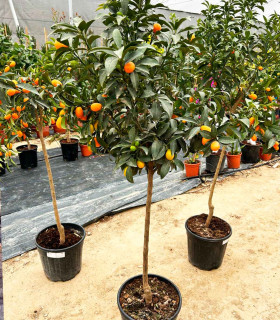


The Washingtonia, native to Mexico, is a fast-growing palm with a tall, column-shaped trunk that is reddish-brown at first and gray with age, crowned by beautiful, bright green, fan-shaped leaves.
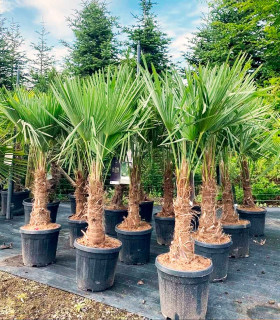
Palm native to the far east characterized by a solitary columnar trunk, unbranched and not shrubby at the base, covered with a dense tangle of brown fiber, which grows rather slowly, reaching a height of 10-12 m.
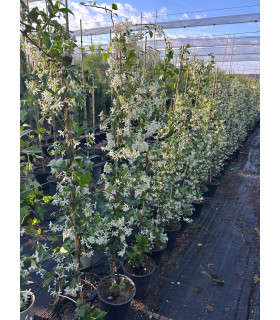
Star Jasmine, Rhyncospermum jasminoides or Trachelospermum jasminoides, is the perfect choice. With its delicate, star-shaped white flowers and intoxicating fragrance, this plant has become a classic for gardens and balconies.
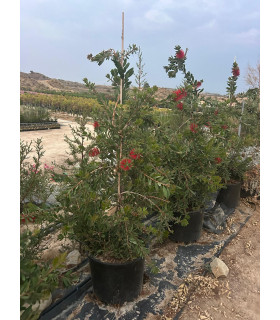
Callistemon, commonly known as bottlebrush or red bottlebrush, is the perfect choice for you. Native to Australia, this evergreen shrub has conquered gardens around the world thanks to its striking flowers and ease of cultivation.
Pot: 12L / 100-120 cm.

The Strelitzia reginae, or Bird of Paradise, is a plant native to South Africa. It has large, dark green, leathery, oblong leaves with long petioles. These are arranged in two rows, forming a fan-shaped crown. Its exotic and striking flowers are a deep orange with a bright blue base. They are shaped like a bird's beak, with three sepals and three petals. They appear in spikes of up to six flowers.

The Eureka Lemon Tree is known for its ability to adapt to various climatic conditions, making it the perfect choice for those who want to enjoy fresh lemons regardless of the season.
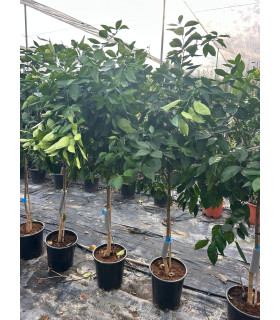
The orange tree (Citrus sinensis) not only captivates with its vibrant fruits and fragrant flowers, but also offers unique physiological benefits.