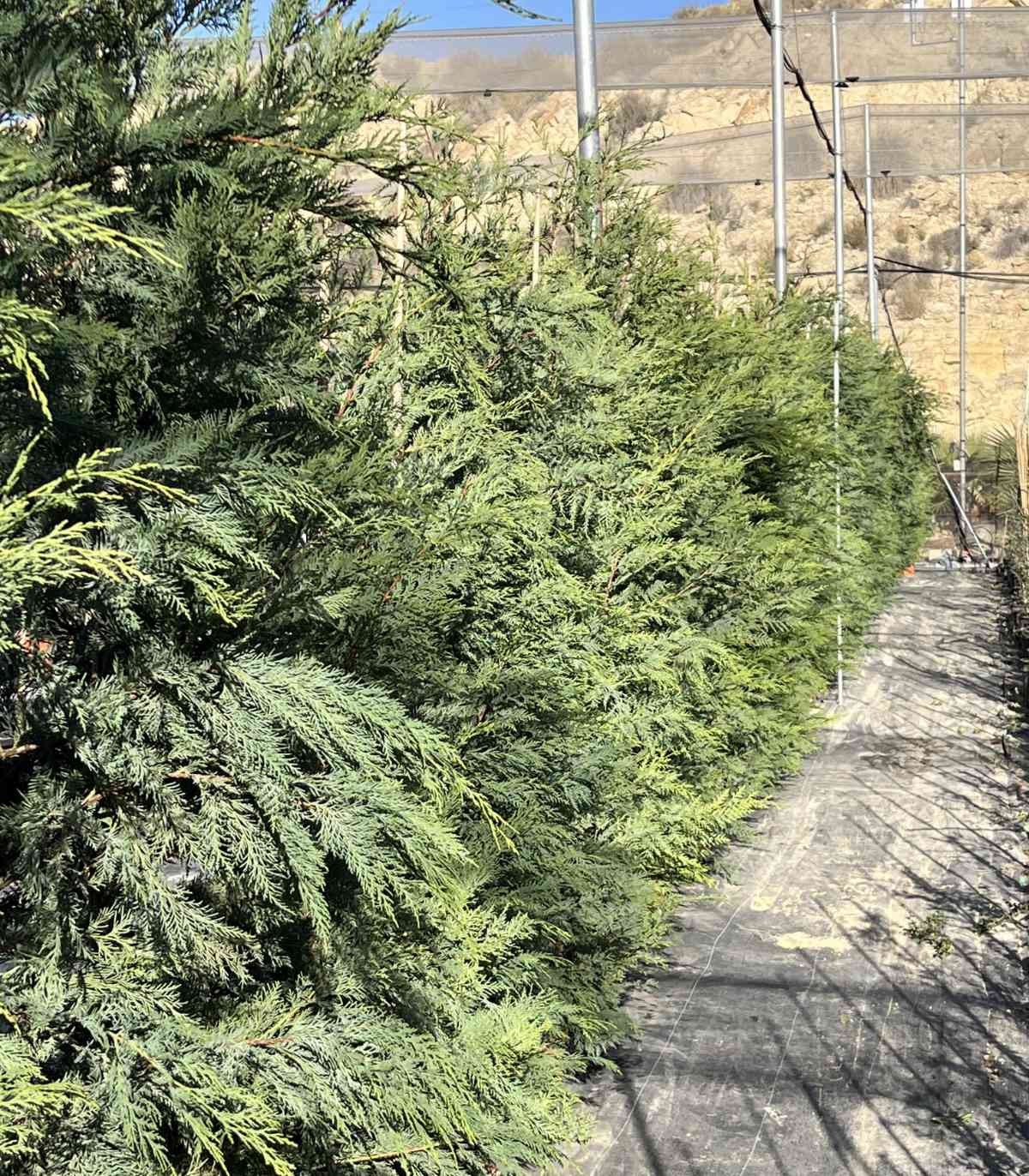
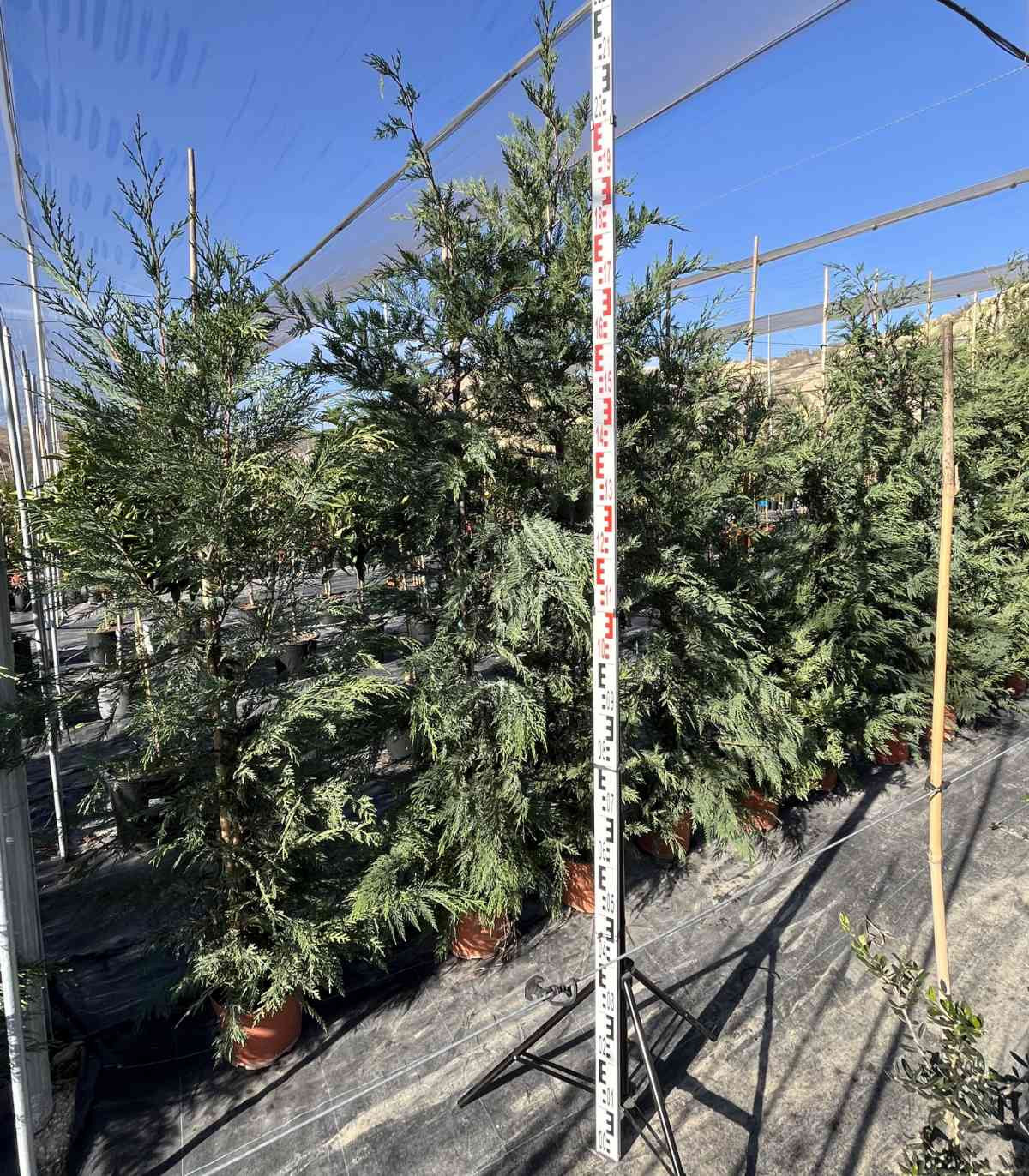
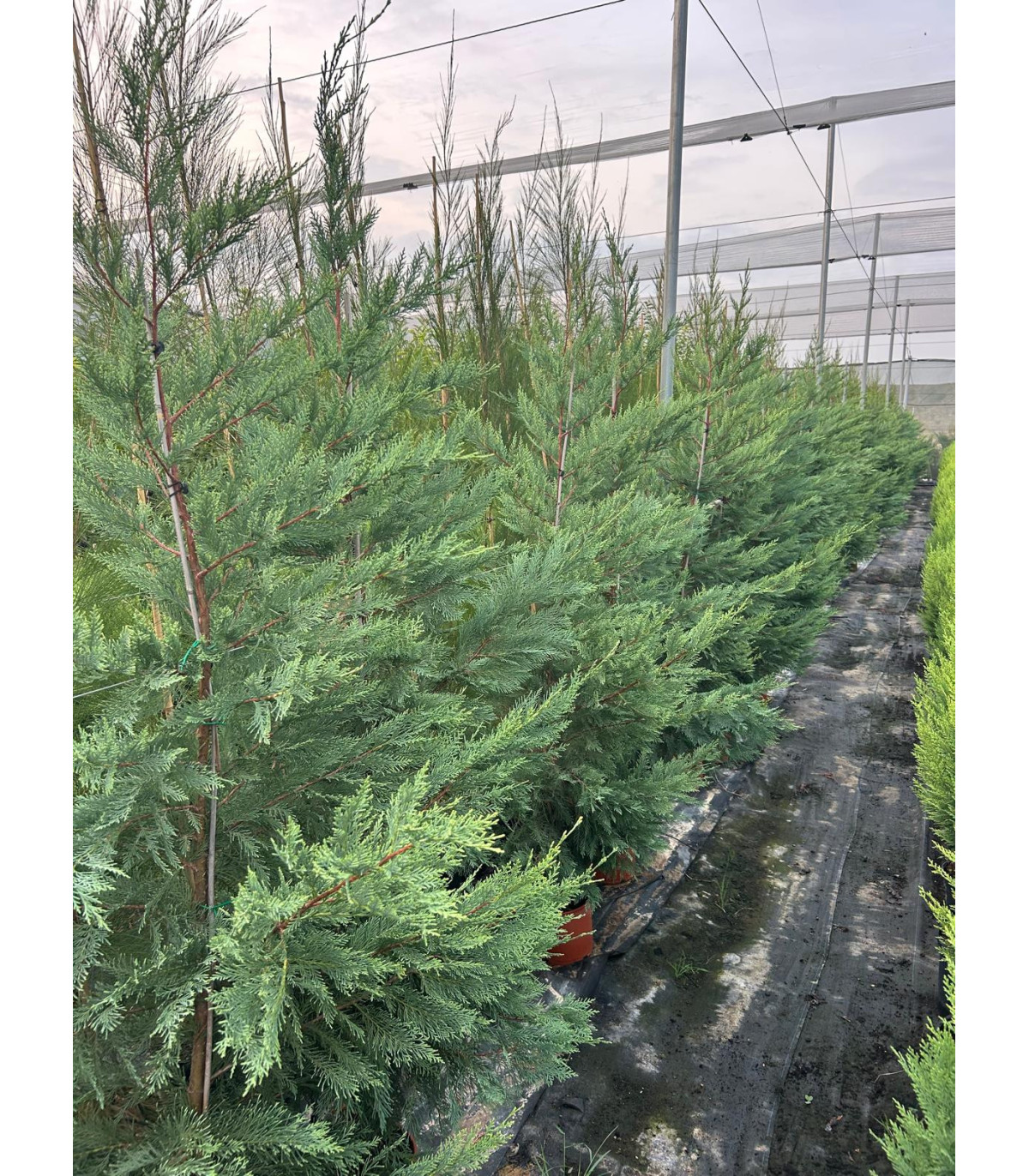
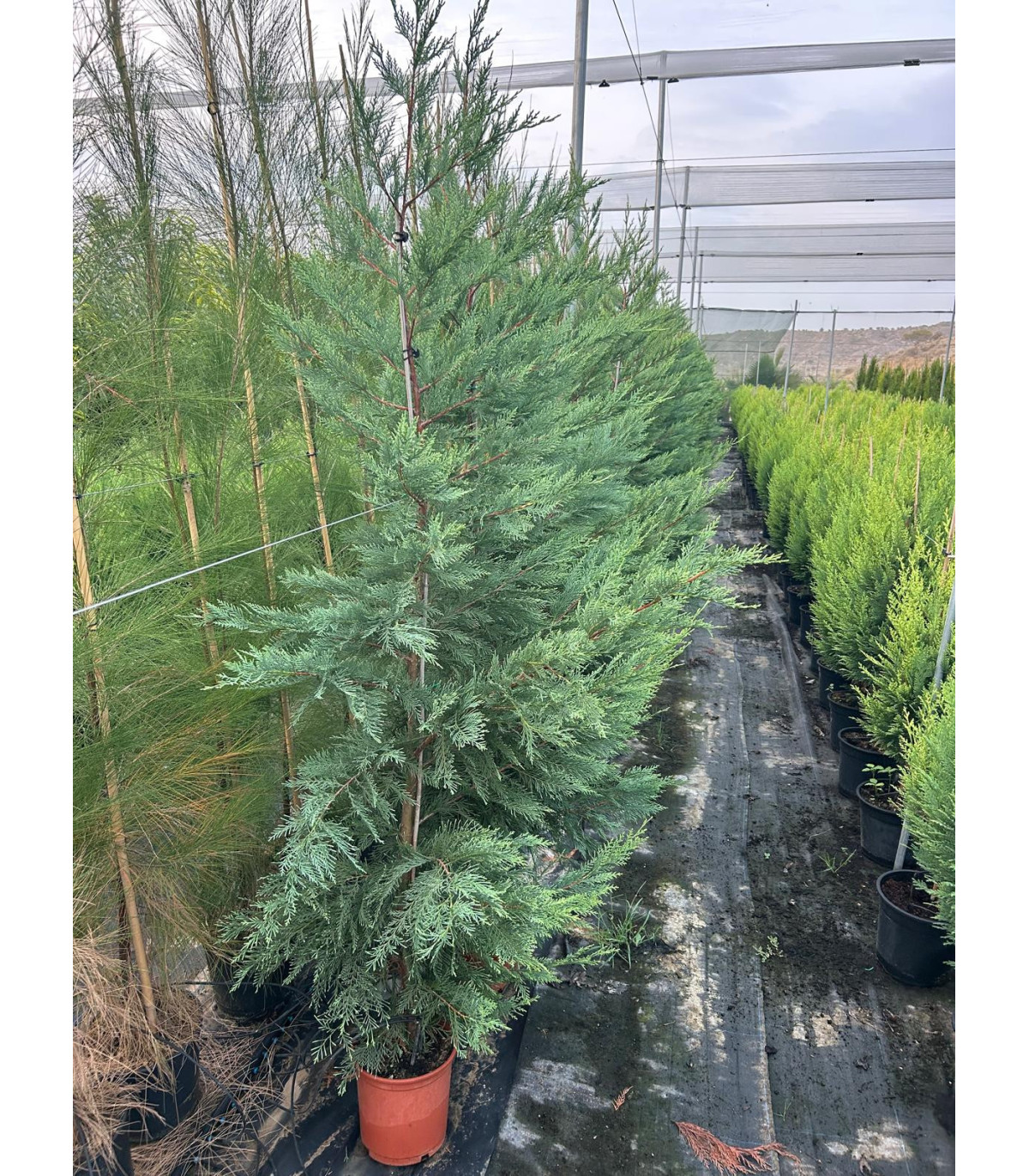
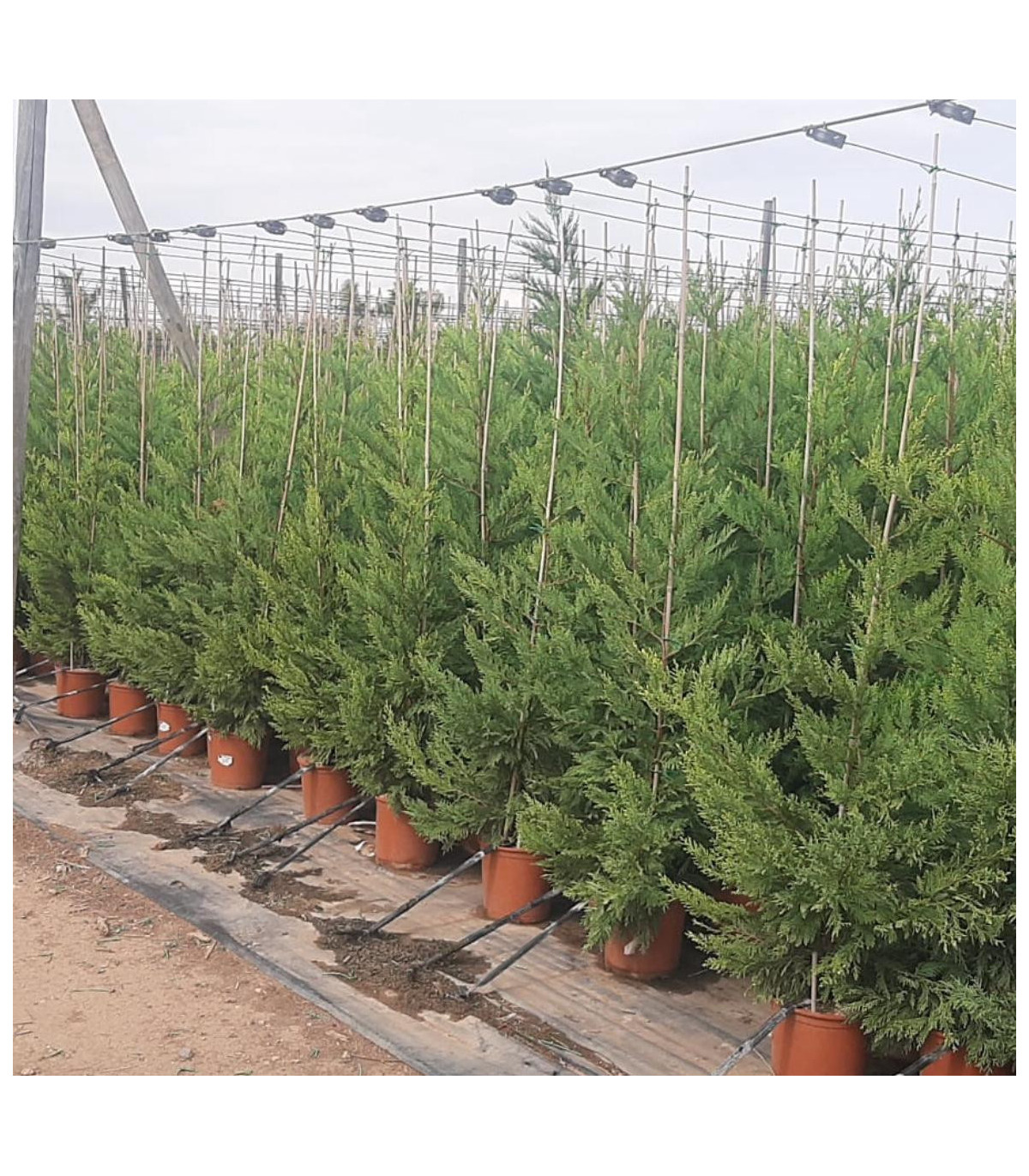

The Leyland cypress (Cupressocyparis leylandii) is the ideal choice. This natural hybrid, the result of a cross between Cupressus macrocarpa and Chamaecyparis nootkatensis, has become a favorite among gardeners and landscape designers worldwide.
Characteristics of the Leyland cypress
The Leyland cypress is notable for its:
- Rapid growth: It is capable of reaching several meters in height in a few years, making it a quick solution for obtaining privacy or delimiting spaces.
- Columnar style: Its narrow, vertical shape makes it perfect for small gardens or confined spaces.
- Evergreen foliage: Its dark green, scaly leaves provide a dense and attractive display all year round.
- High adaptability: Tolerates a wide variety of soils and climates, from coastal to inland areas.
- Pruning resistance: It withstands frequent and severe pruning, allowing the hedge to be shaped as desired.
Leyland cypress care
Despite its hardiness, the Leyland cypress requires some basic care to ensure its proper development:
- Location: Prefers sunny or partially shaded places.
- Watering: Young plants need regular watering, especially during the first few years. Adults are more resistant to drought.
- Soil: It adapts to almost any type of soil, but prefers well-drained soils.
- Pruning: It is recommended to carry out formative pruning at least once a year, especially in the first few years. Maintenance pruning can be done as needed.
- Fertilization: An application of organic fertilizer in spring will promote its growth.
Uses of Leyland cypress
Leyland cypress is widely used in:
- Hedges: Thanks to its rapid growth and density, it is ideal for creating tall, dense hedges that offer privacy and protection.
- Windbreak screens: Its columnar shape and dense foliage make it an excellent choice for protecting gardens from strong winds.
- Isolated specimens: It can be planted as an isolated specimen to create a focal point in the garden.