
The Washingtonia, native to Mexico, is a fast-growing palm with a tall, column-shaped trunk that is reddish-brown at first and gray with age, crowned by beautiful, bright green, fan-shaped leaves.
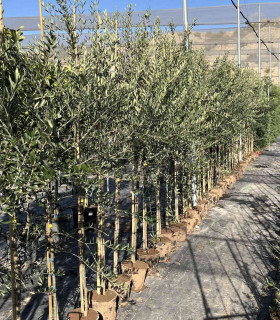
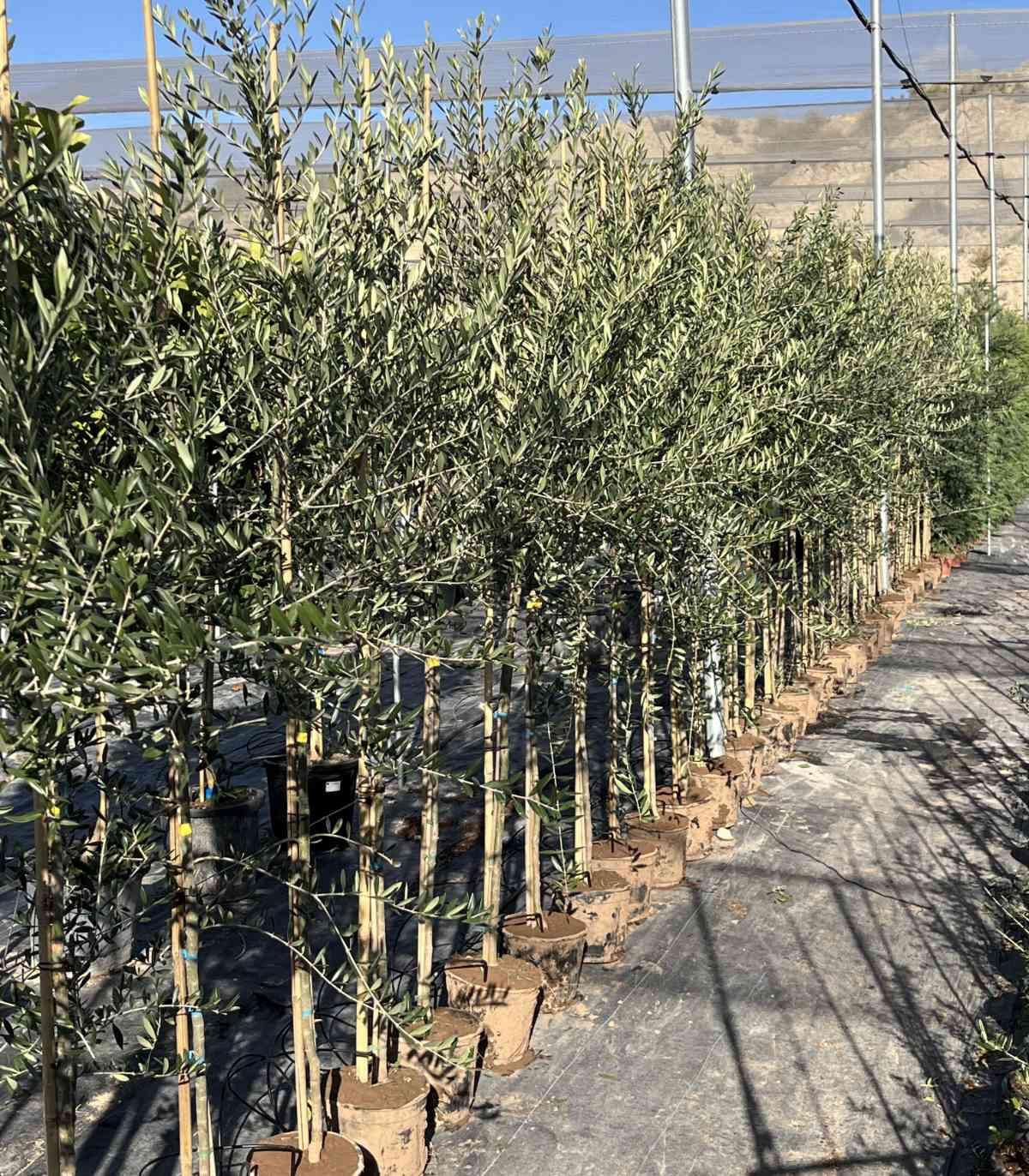
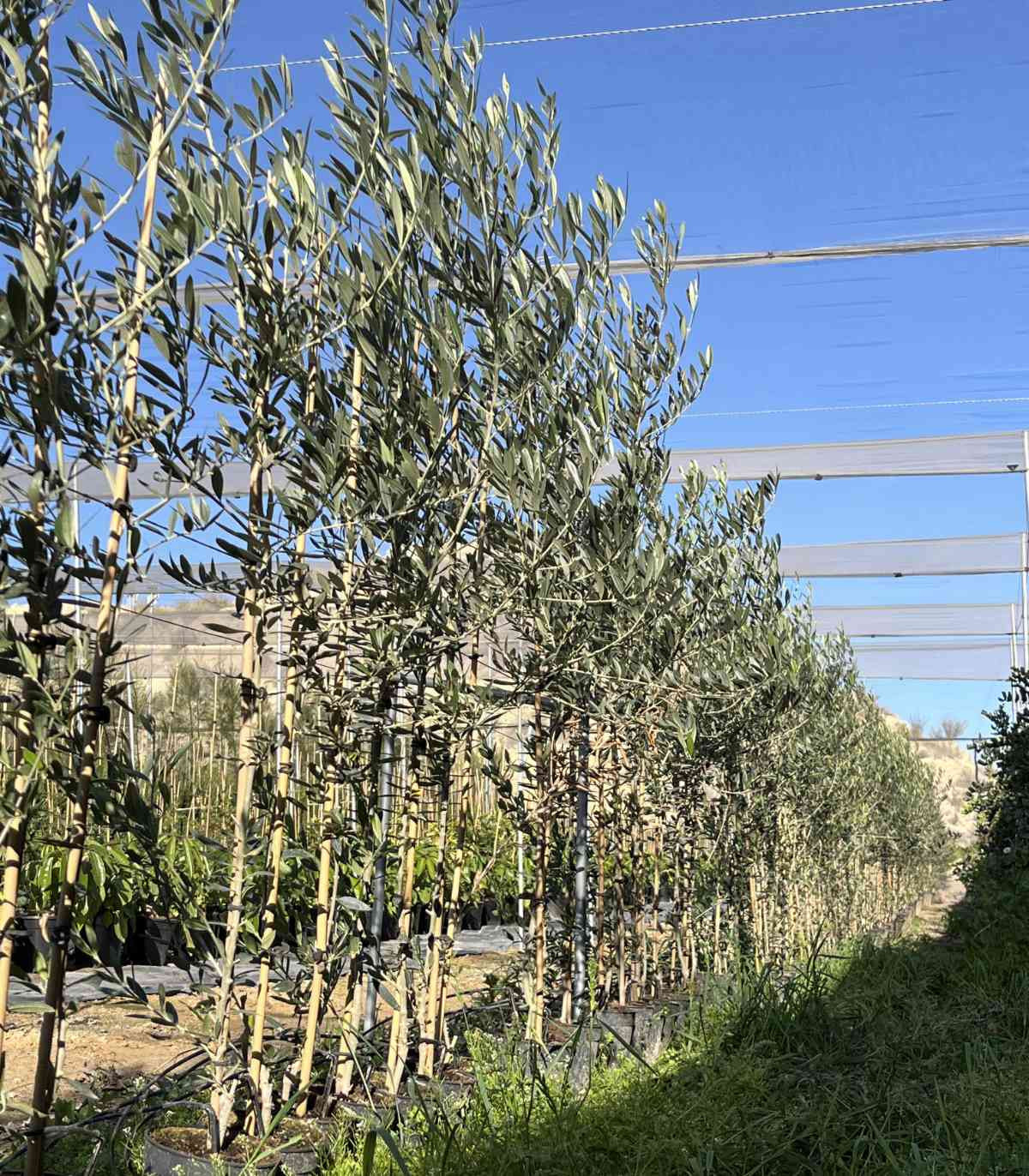
The olive tree originated in the Mediterranean basin. It is an evergreen tree, among the longest-lived in existence (2000 years), which very slowly reaches 9 meters in height and 5-7 meters in width, and more if it finds the space.
When young, they have a straight trunk covered with smooth, silvery-gray bark that becomes twisted, gnarled, dark with age and often decays. Leaves: evergreen, opposite, leathery, oval or narrowly oval, with a light green, hairless upper surface and a lighter underside covered with silvery down. Flowers: bloom from April to June and are white, not very showy, but fragrant. They are clustered in the leaf axils. Fruit - Olives: botanically speaking, they are ovoid drupes containing a single seed (stone) and are green, turning shiny black when ripe in autumn. The oil is obtained by pressing them. Cultivation: the olive tree likes sun and dislikes excessive moisture; it requires deep, dry, well-drained soil, preferably south-facing and sheltered from strong winds.
It tolerates drought. Hardiness: botanists assign it zone 9, but experience shows that in the last 20 years olive trees have withstood temperatures of -7/-10°C sporadically and have not suffered damage.