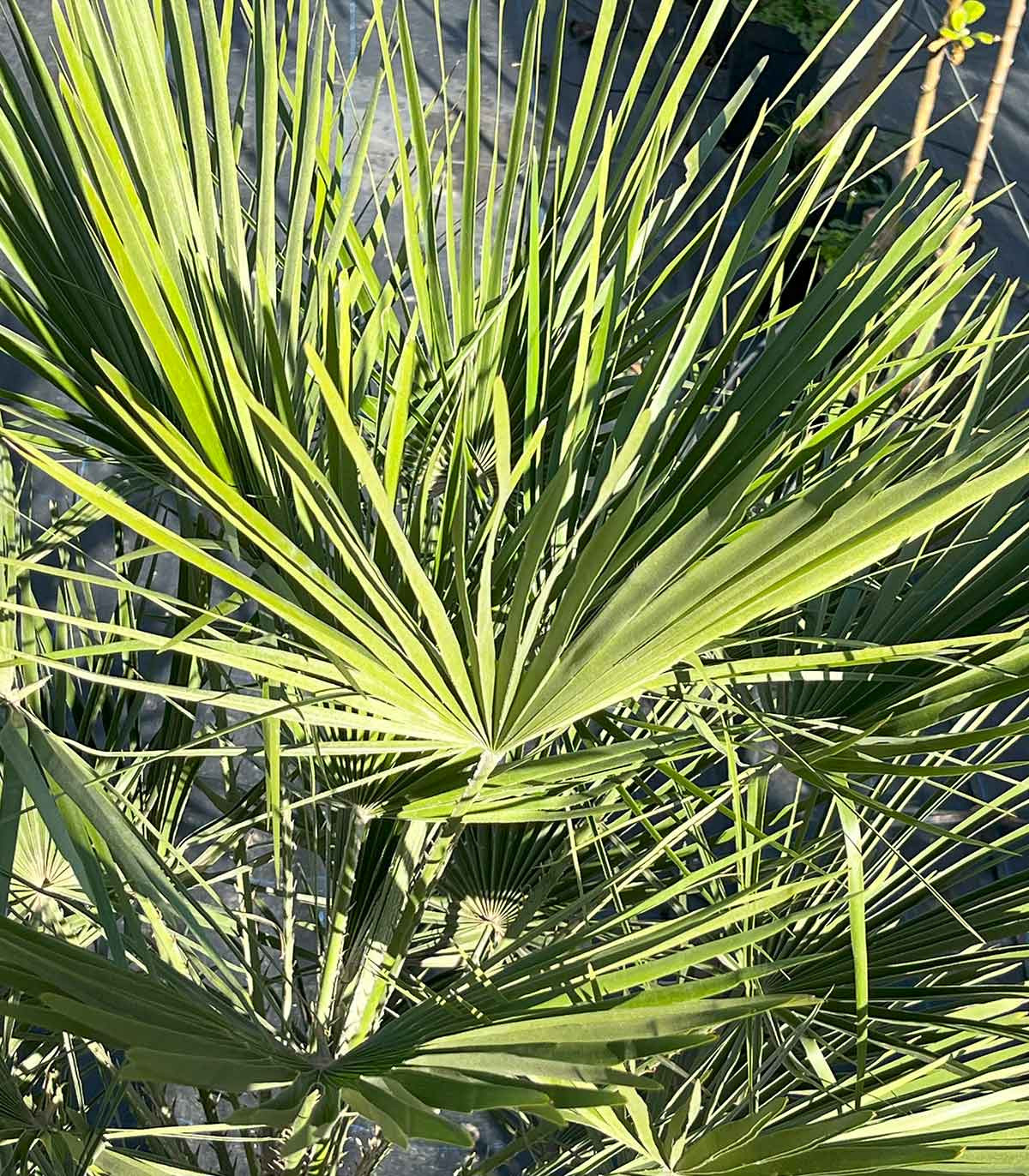

Chamaerops Humilis "Heartroot"

Various sizes

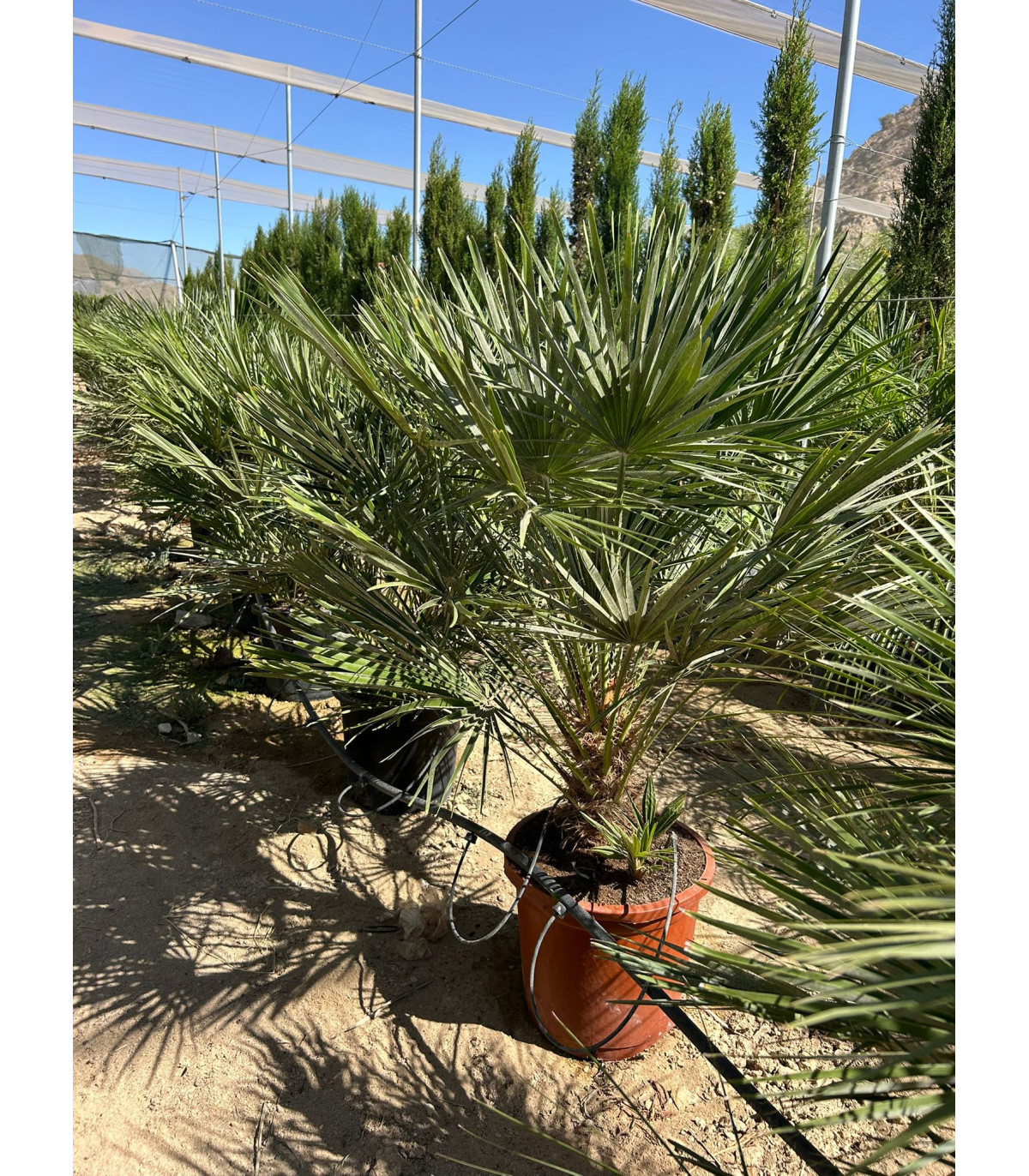
The Chamaerops humilis, commonly known as the dwarf palm, is the ideal choice. Native to the Mediterranean region, this species has earned a prominent place in gardening for its hardiness and beauty.

Read moreShow less
€47.30 (tax incl.)
Size
  • 17 liters / 120-140 cm
  • 35 liters / 160-180 cm
  • 25 litros / 140-160 cm
Reference:
Description

The Chamaerops humilis, commonly known as the dwarf palm, is the ideal choice. Native to the Mediterranean region, this species has earned a prominent place in gardening for its hardiness and beauty.

Characteristics of the Chamaerops Humilis

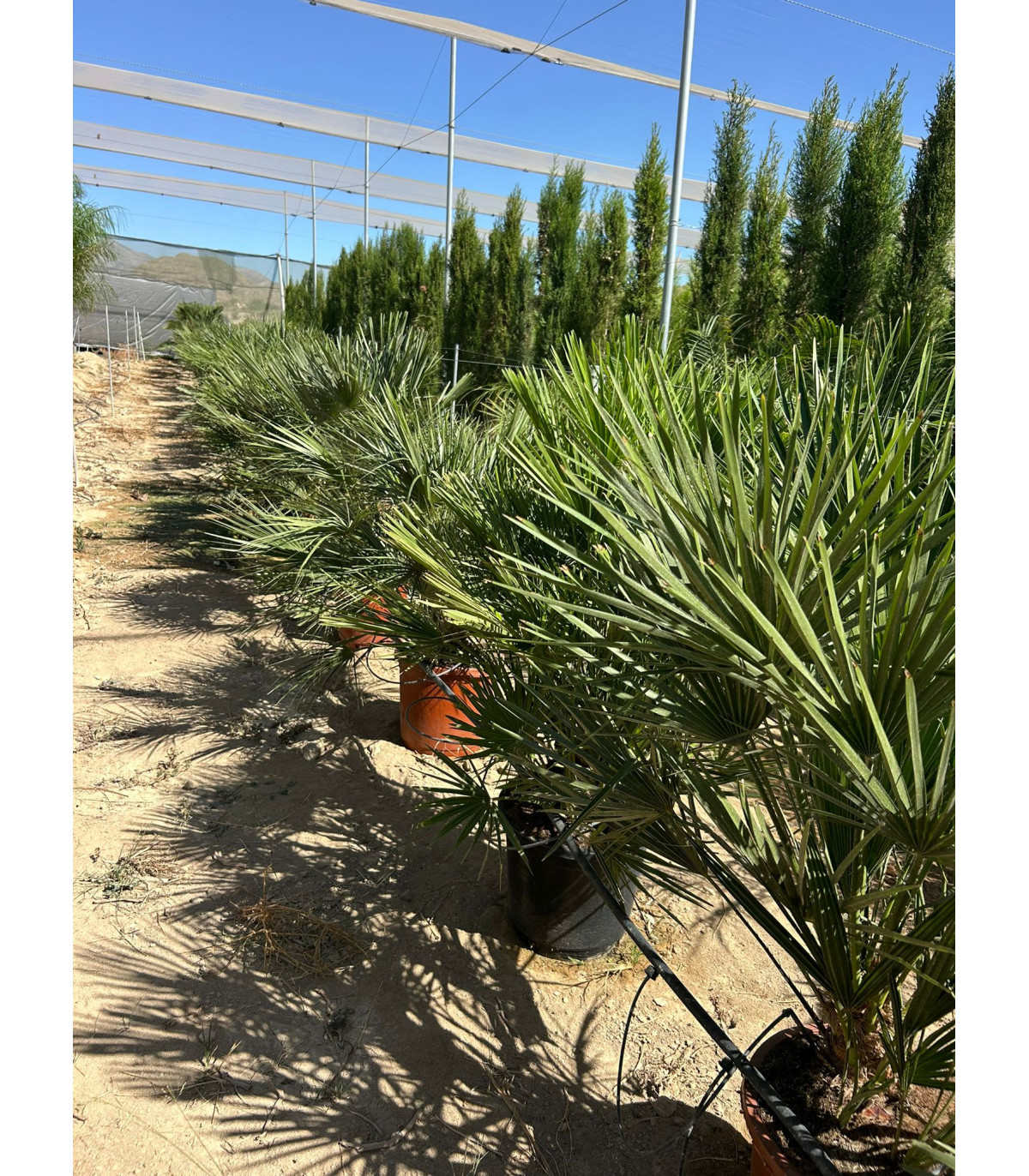
The dwarf palm is a small to medium-sized palm, perfect for gardens of any size. Its fan-shaped leaves are a deep green and leathery, giving it a robust and exotic appearance. One of its most distinctive characteristics is its ability to form dense clumps, creating a very attractive visual effect.

  • Size: It can reach up to 3 meters in height, but its growth is slow.
  • Leaves: Palmate and dark green, often with spines on the petiole.
  • Trunk: Multiple, giving it a more shrubby than arboreal appearance.
  • Fruits: Small, bluish-black drupes that ripen in autumn.

Care of the Palm Heart

The Chamaerops Humilis is a very hardy and adaptable plant, but it requires some basic care to look its best.

  • Location: Prefers sunny or partially shaded locations. Tolerates direct sunlight very well.
  • Soil: It adapts to all types of soil, although it prefers well-drained ones.
  • Watering: Requires moderate watering, especially in summer. Avoid waterlogging.
  • Temperature: It withstands moderate frosts down to -10ºC, making it an ideal plant for temperate and cold climates.
  • Pruning: Pruning is mainly done to remove dry or damaged leaves.

Why buy a Chamaerops Humilis?

  • Resistance: It withstands drought, wind, and high temperatures.
  • Adaptability: It adapts to different soil types and climates.
  • Low maintenance: It does not require excessive care.
  • Ornamental value: Its dense and elegant foliage beautifies any garden.
  • Versatility: It can be grown in pots or in the ground.
Read moreShow less
Product Details
Reviews
No comments
Comments (0)
Customers who bought this product also bought:
Various sizes
€71.50 (tax incl.)

The Strelitzia Augusta, also known as the White Bird of Paradise, is a plant native to South Africa that stands out for its exotic beauty. Its large, oval, deep green leaves, with a prominent central vein, give it an elegant, tropical appearance.

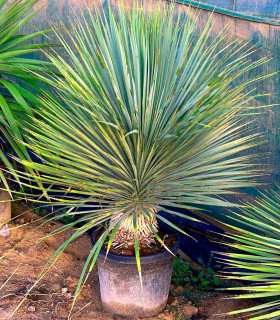
Various sizes
€18.15 (tax incl.)

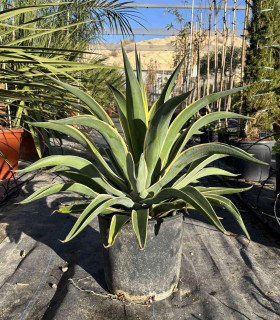
The Agave is a genus of succulent plant, native mainly to the warm regions of Mexico and the southern states of the United States, now adapted to the Mediterranean zone.

Various sizes
€20.57 (tax incl.)

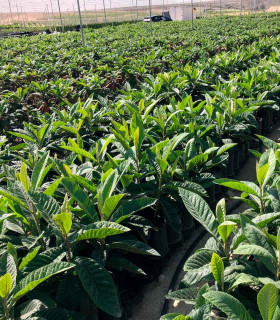
The loquat is a large evergreen shrub or small tree with a rounded crown, native to Japan. Its Latin scientific name is Eriobotrya japonica. It has large leaves, 12-15 cm long.

€20.90 (tax incl.)

The plum tree is a small tree that rarely exceeds 6-7 m in height; hardy, it adapts to the most diverse climates and can be successfully grown in all regions of Spain, Italy and France.

Pot: 9L / 150-200 cm

Various sizes
€19.36 (tax incl.)

The Agave is a genus of succulent plant, native mainly to the warm regions of Mexico and the southern states of the United States, now adapted to the Mediterranean zone.

€42.90 (tax incl.)

The strawberry tree originates in the Mediterranean basin. It is one of the main shrub species of the Mediterranean basin and the pine undergrowth of the coast.

Format: 10 L / 120-140 cm

Various sizes
€53.90 (tax incl.)

The Strelitzia reginae, or Bird of Paradise, is a plant native to South Africa. It has large, dark green, leathery, oblong leaves with long petioles. These are arranged in two rows, forming a fan-shaped crown. Its exotic and striking flowers are a deep orange with a bright blue base. They are shaped like a bird's beak, with three sepals and three petals. They appear in spikes of up to six flowers.

You may also like
No items
Menu
Settings