
The Strelitzia Augusta, also known as the White Bird of Paradise, is a plant native to South Africa that stands out for its exotic beauty. Its large, oval, deep green leaves, with a prominent central vein, give it an elegant, tropical appearance.
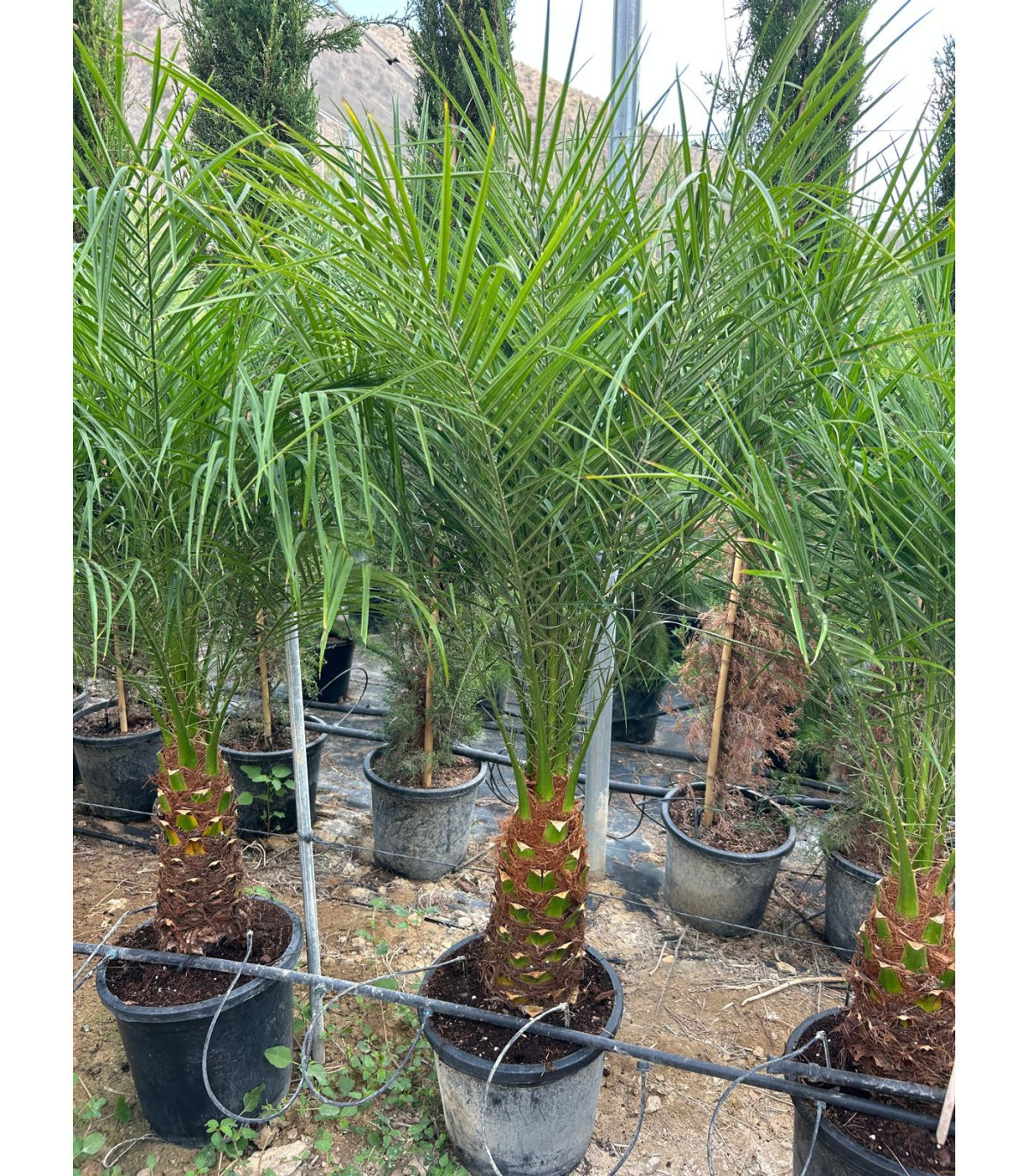
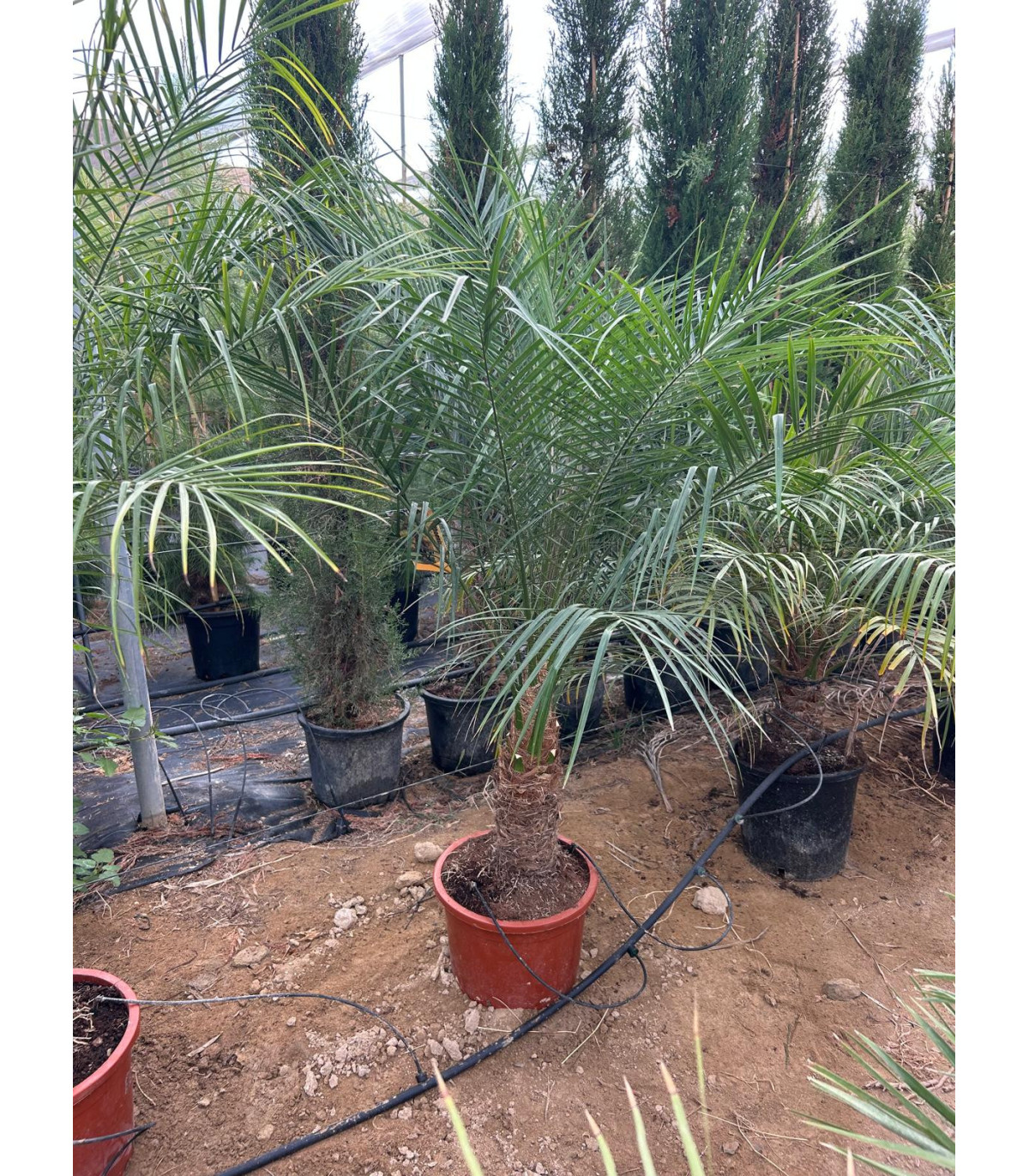
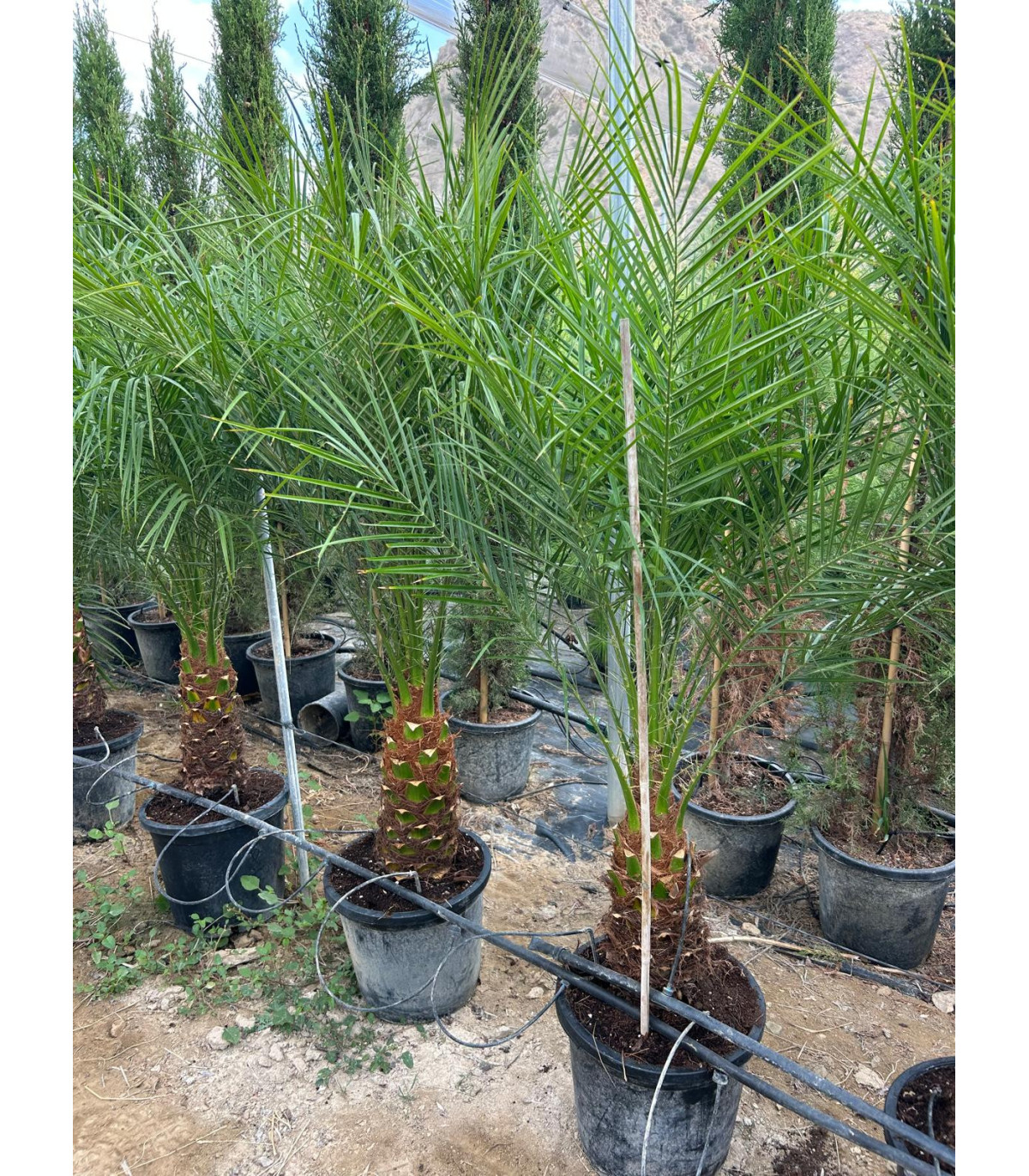
The Phoenix roebelenii, also known as the dwarf palm, is an ideal choice. Its compact size, feathery leaves, and hardiness make it one of the most popular indoor and outdoor plants. In this article, we'll provide you with all the information you need to care for your Phoenix roebelenii and enjoy its beauty for years to come.
Characteristics of the Phoenix Roebelenii
The Phoenix roebelenii is a slow-growing, small palm, ideal for limited spaces. Its bright green, arching, pinnate leaves give it a tropical and exotic appearance. The trunk is slender and can branch out over time, forming a clump of palms.
- Size: Ideal for pots and small gardens. It reaches a maximum height of 5 meters, but in cultivation it is usually much smaller.
- Leaves: Pinnate, deep green and slightly arched.
- Flowers: Small and yellow, grouped in inflorescences.
- Fruits: Small drupes that turn black when ripe.
Care of the Phoenix Roebelenii
The Phoenix Roebelenii is a relatively easy plant to care for, but it does require some basic care to stay healthy.
- Light: Prefers bright places, but avoids direct sun exposure during the hottest hours of the day.
- Temperature: It adapts to a wide range of temperatures, but prefers warm climates. It tolerates minimum temperatures of 5°C.
- Watering: Water regularly, keeping the substrate slightly moist but not waterlogged. Reduce watering in winter.
- Humidity: It appreciates humid environments. You can increase the ambient humidity by misting its leaves with water regularly.
- Substrate: Use a well-drained substrate rich in organic matter.
- Fertilization: Fertilize every 2-3 months during spring and summer with a liquid fertilizer for palm trees.