


Various sizes
€8.47
(tax incl.)
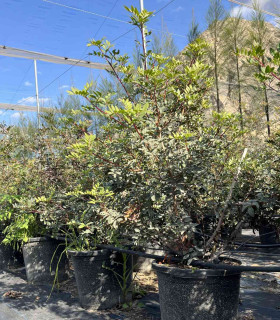
The carob tree is a large evergreen tree whose origin is the Mediterranean basin.

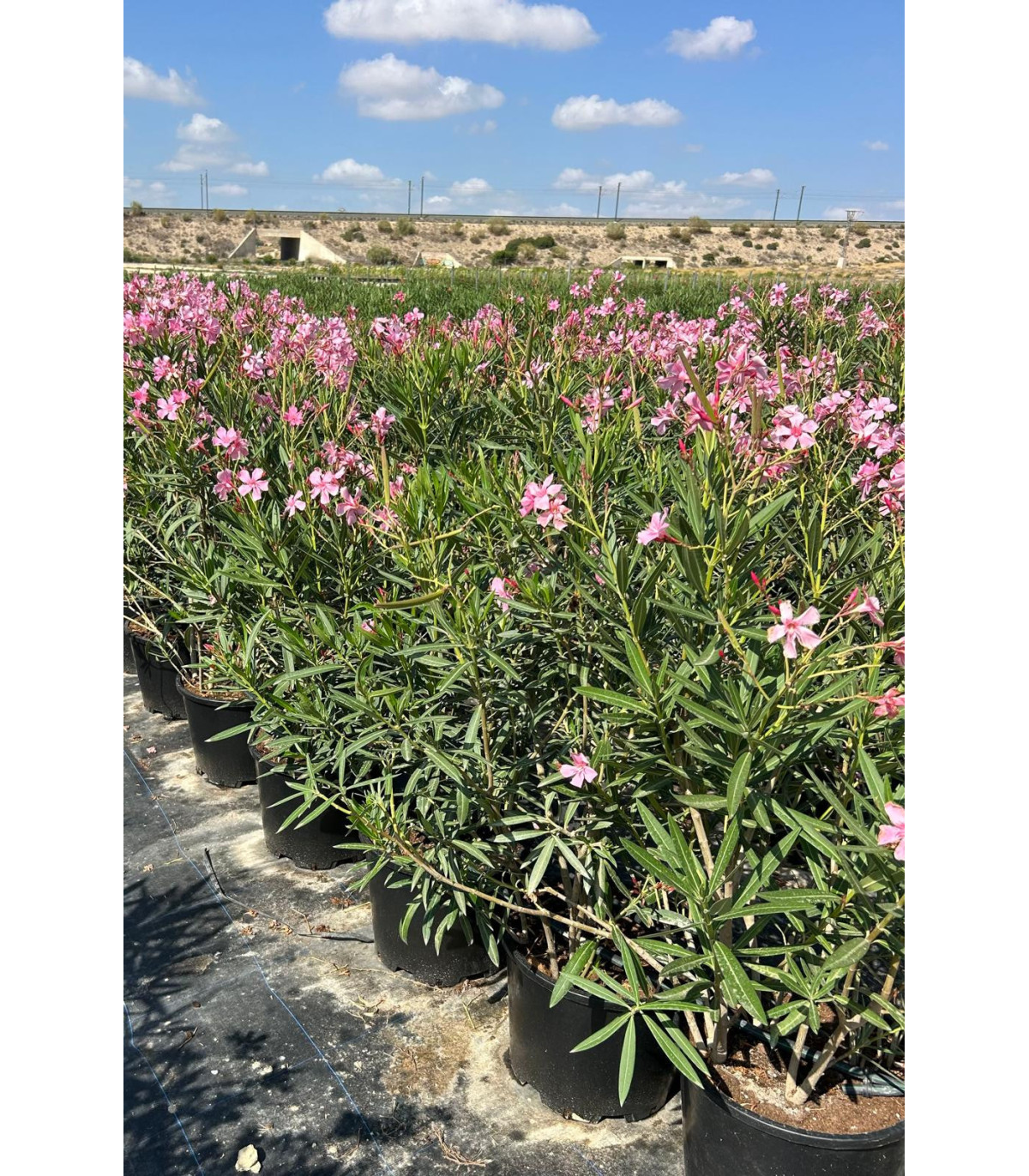
Oleander, also known as rosebay, is native to the Mediterranean basin, Persia, India, and Japan. It is an evergreen shrub with a compact, rounded, bushy habit.
Oleander, also known as rosebay, is native to the Mediterranean basin, Persia, India, and Japan. It is an evergreen shrub with a compact, rounded, bushy habit. It has become a symbol of the Mediterranean summer, of seaside holidays where it finds its original habitat and where few plants offer such a spectacular and long-lasting bloom. It has evergreen, lanceolate, entire, and rather leathery leaves, arranged in whorls of 2-3, of a medium green color (variegated in some varieties). Its flowers, depending on the variety, can be single or double, fragrant or less fragrant, and come in a wide range of colors; they are clustered in terminal cymes and last throughout the summer. The fruits appear after flowering, in long pods containing woolly seeds. It typically grows in poor soil, but in the garden, it's best planted in well-prepared, fertile soil. If grown in a pot, it should be deeper than it is wide to allow space for its long roots. It doesn't require much water during the winter, but from spring to autumn, it needs plenty of moisture.
Physiological and cultivation characteristics:
The carob tree is a large evergreen tree whose origin is the Mediterranean basin.
The mastic tree, also known as the mastic tree, is native to the Canary Islands, Morocco, and the Mediterranean coast. It is an evergreen shrub or small tree typical of Mediterranean scrubland; it has an upright habit in its early years, and later the crown widens and becomes rounded.
Native to Mexico and Guatemala, the Beaucarnea, also known as elephant's foot, is perfectly adapted to hot, dry climates. Its main characteristic is its robust trunk, similar to an elephant's foot, which stores water. Long, slender, deep green leaves sprout from the top of the trunk, creating an elegant contrast.
Pot: 10L / 70-90 cm
Pistacia terebinthus , commonly known as terebinth or cornicabra, is a shrub or small tree up to 6 m tall belonging to the cashew family (Anacardiaceae), genus Pistacia, native to the western Mediterranean and ranging from the Canary Islands, Morocco and the Iberian Peninsula, to Greece and western Turkey.
The Washingtonia, native to Mexico, is a fast-growing palm with a tall, column-shaped trunk that is reddish-brown at first and gray with age, crowned by beautiful, bright green, fan-shaped leaves.
The Chamaerops humilis, commonly known as the dwarf palm, is the ideal choice. Native to the Mediterranean region, this species has earned a prominent place in gardening for its hardiness and beauty.
Please sign in first.
Sign in