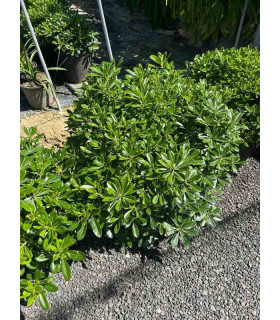


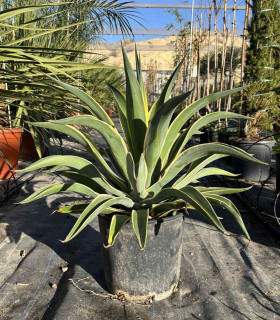

The mastic tree, also known as the mastic tree, is native to the Canary Islands, Morocco, and the Mediterranean coast. It is an evergreen shrub or small tree typical of Mediterranean scrubland; it has an upright habit in its early years, and later the crown widens and becomes rounded.
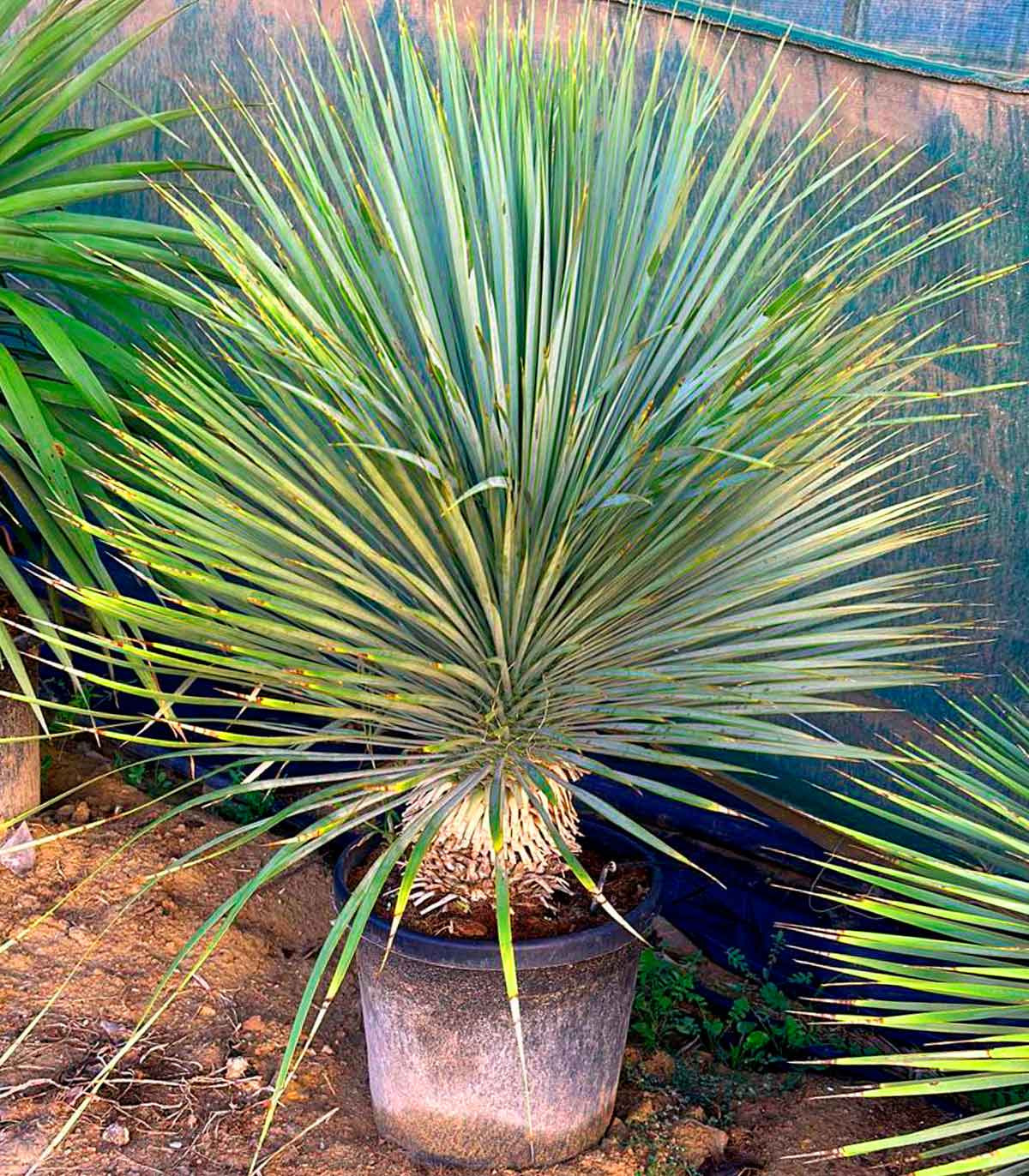
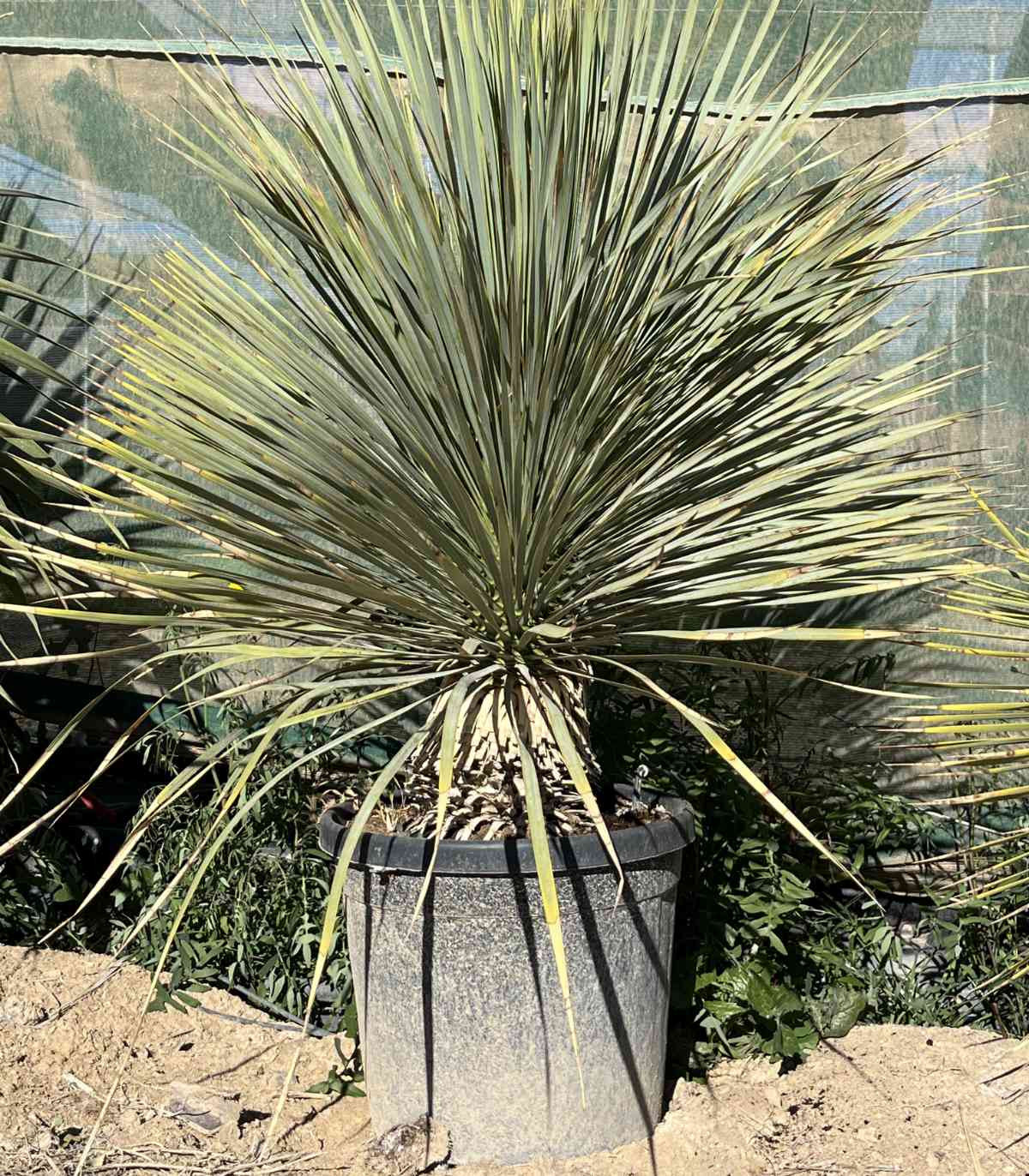
Yucca rostrata is a rather rare, tree-like yucca native to Mexico. Its leaves are 42 to 60 cm long and 12-17 mm wide.
Yucca rostrata is a rather rare, tree-like yucca native to Mexico. Its leaves are 42 to 60 cm long and 12-17 mm wide. The leaves are rigid, linear, slightly widened in the middle, glaucous in color with densely toothed margins tinged with yellow. It has a whitish, very elegant trunk, and a flowering stem 30 to 70 cm long, bearing a long panicle of white, campanulate flowers at the tip, which bloom in summer and autumn.
Yucca rostrata is a species widely used in landscaping today due to its unique appearance and beauty. It is frequently seen in rock gardens, for example, or alongside other yuccas or palms. It is also used as a specimen tree, but it's important to note that it grows very slowly, and if planted small, it will take several years to develop a slender and striking trunk.
Physiological and cultivation characteristics:
- It can reach a height of 4 to 5 meters and a width of 1 or 2 meters.
- It belongs to rusticity zone 9.
- It is slow-growing.
- It must be in an area exposed to full sun.
- Suitable for small gardens.
- It can be grown in pots, planters and flower boxes to decorate terraces, balconies, etc.
- It can be planted individually but is also suitable for forming groups (more plants of the same variety).
- It withstands the sea.