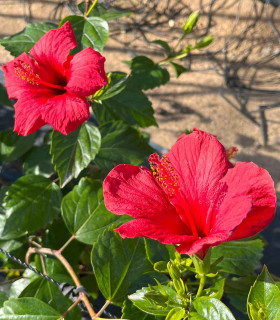

A genus comprising vigorous climbing shrubs with long, more or less thorny branches. The leaves are alternate and entire, and the small, almost insignificant white flowers are surrounded by three large, vividly colored bracts that constitute their true beauty and remain on the plant throughout the warm months, from June to October; afterwards, they turn green, dry out, and become papery.
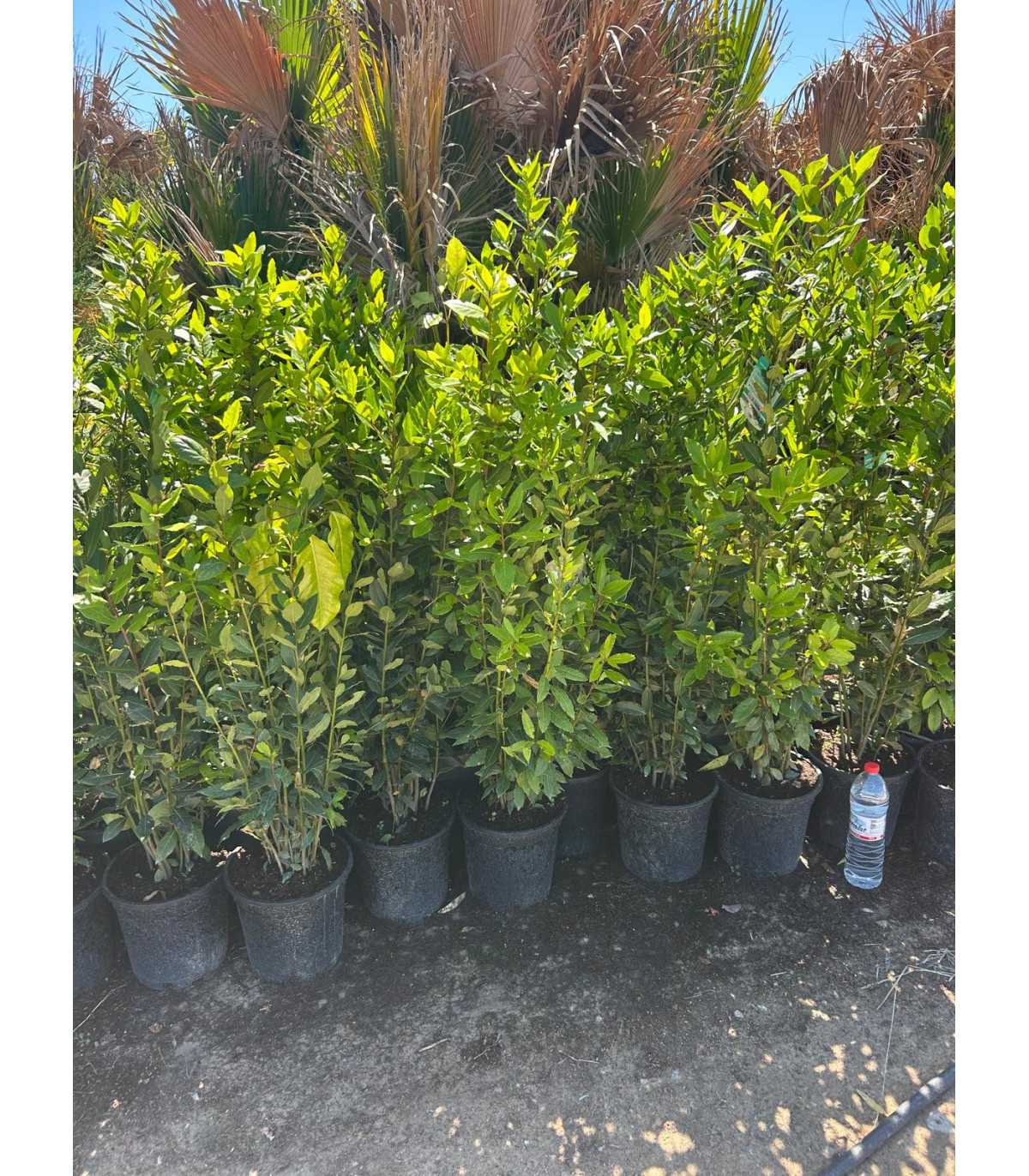
The bay laurel (Laurus nobilis) is an aromatic tree of the Lauraceae family, known for its leathery leaves, small flowers and drupe-like fruits.
Pot: 6L / 60-80 cm.
€31.90 (tax incl.)
Reference:
The bay laurel (Laurus nobilis) is an aromatic tree of the Lauraceae family, known for its leathery leaves, small flowers and drupe-like fruits.
Adaptation to varied climates:
- It grows in Mediterranean climates, tolerating temperatures between -5°C and 40°C.
- It is drought-resistant and thrives in calcareous and well-drained soils.
- Its leathery leaves minimize water loss through transpiration.
Photosynthesis and essential oil production:
- Its leaves contain chloroplasts that capture sunlight for photosynthesis.
- Essential oils, such as eugenol and cineole, are found in leaves and fruits.
- These oils give the plant aroma and medicinal properties.
Reproduction:
- The laurel is a dioecious species, with male and female flowers on different trees.
- Pollination is carried out by insects such as bees.
- The fruits are black drupes that contain a single seed.
Growth and development:
- The laurel tree can reach up to 10 meters in height.
- It has a branched trunk and a dense crown.
- Its leaves are lanceolate, dark green in color, and have a wavy edge.
- It grows slowly, but can live for centuries.
Symbiotic relationships:
- The bay tree can harbor mycorrhizae, beneficial fungi that help in the absorption of nutrients.
- It attracts various pollinating insects and birds that feed on its fruit.
In summary, the bay laurel is a resilient plant with a physiology adapted to Mediterranean climates. Its leathery leaves, production of essential oils, and symbiotic relationships allow it to thrive in diverse environments.