


Various sizes
€38.50 (tax incl.)
The Eureka Lemon Tree is known for its ability to adapt to various climatic conditions, making it the perfect choice for those who want to enjoy fresh lemons regardless of the season.

Originally from China and India, it is, within the hibiscus genus, the most widespread species in continental Europe, the only one that is completely rustic.
Pot: 6L / 120-140 cm
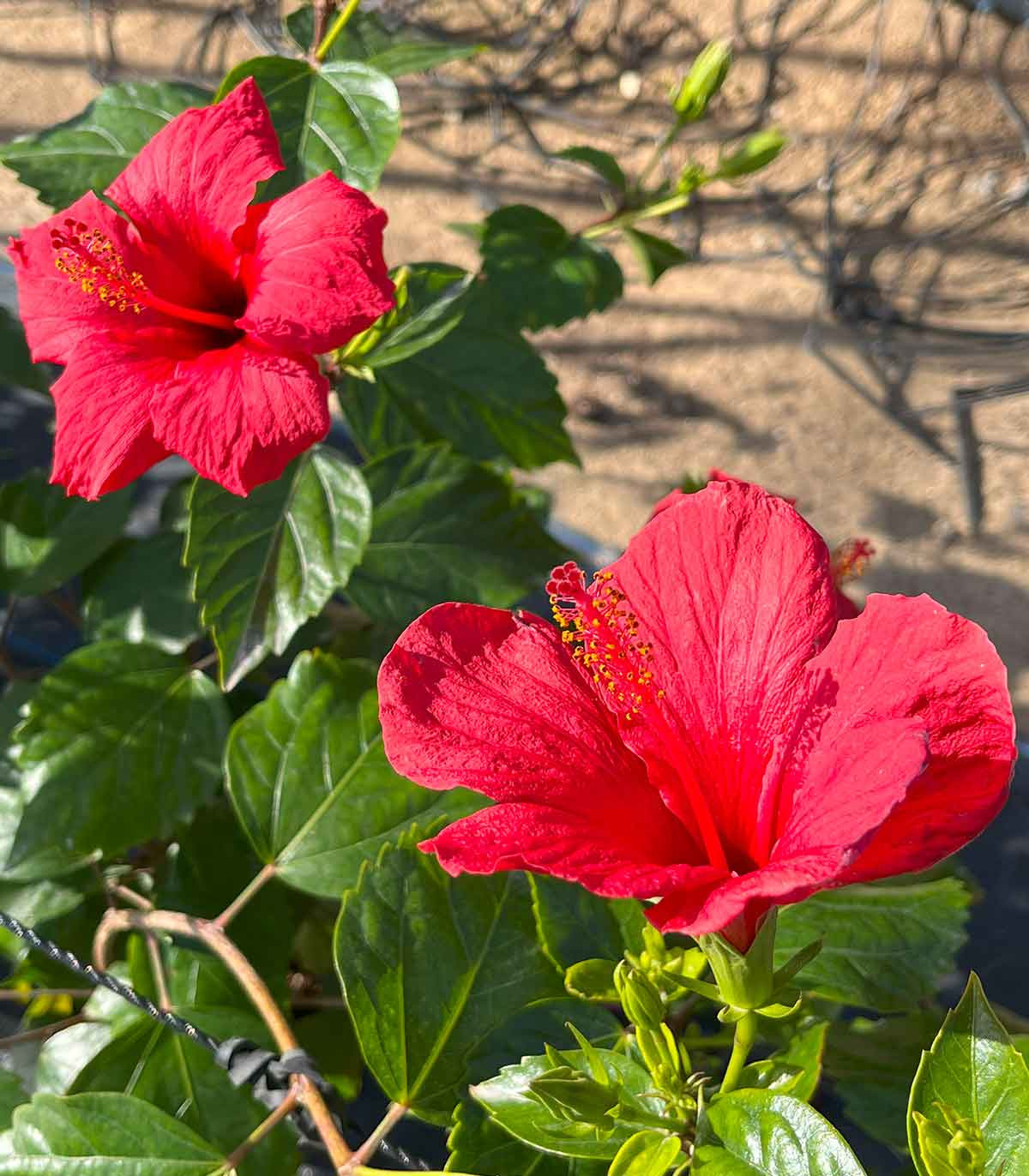
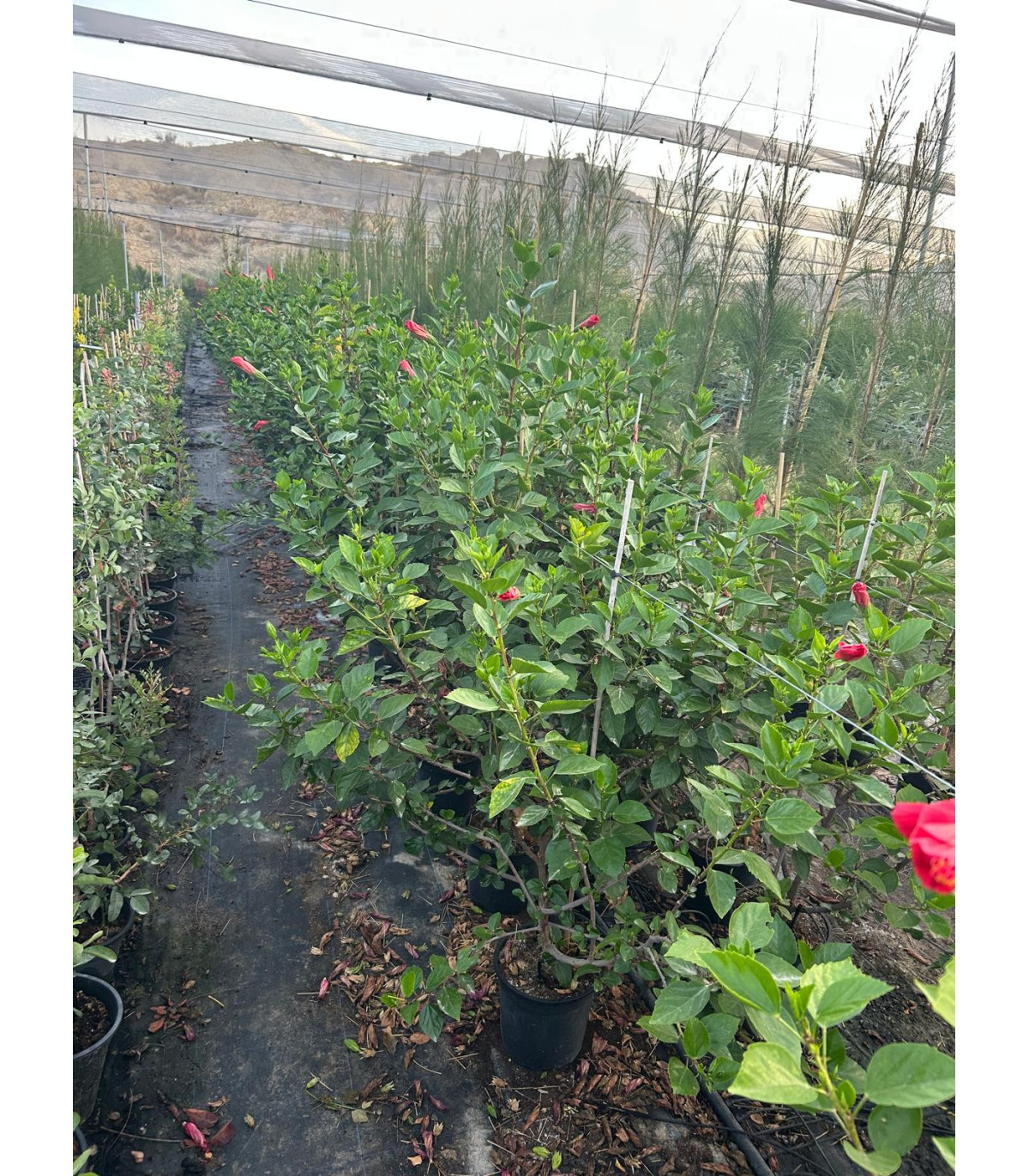
Native to China and India, it is the most widespread species of hibiscus in continental Europe, and the only one that is completely hardy. It is a deciduous shrub, although in temperate climates it can retain its leaves year-round. Densely branched and upright, it doesn't take up much space or grow very large, making it easy to plant in small areas.
It can be easily shaped halfway up the stem or at the top. Leaves: They exhibit some polymorphism, as they can be triangular, oval, or trilobed, more or less toothed, with a maximum length of 10 cm, and are dark green. Flowers: They appear continuously from June to September in the leaf axils of the current year's branches; they are bell-shaped, approximately 6 cm long, and are composed of petals that can be pink, white, red, or blue, while the center is dark red with long white stamens and yellow anthers.
Fruit: dark gray capsules, about the size of a fingernail, after flowering. Cultivated successfully in northern Italy up to 1000 m altitude. If it suffers severe frost when young, it recovers from the base. It prefers fertile, moderately moist soil.
It requires vigorous pruning in February to encourage the growth of new shoots that will produce flowers.
Physiological and cultivation characteristics:
The Eureka Lemon Tree is known for its ability to adapt to various climatic conditions, making it the perfect choice for those who want to enjoy fresh lemons regardless of the season.
The apple tree, a fruit tree from the rose family, is an excellent choice for beautifying your garden and producing high-quality fruit. In this comprehensive guide, we'll provide you with all the information you need to grow your own apple tree and reap a bountiful harvest.
Pot: 10L / 150-200 cm
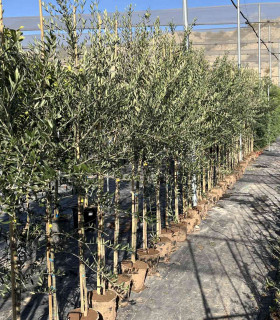
The olive tree originated in the Mediterranean basin. It is an evergreen tree, among the longest-lived in existence (2000 years), which very slowly reaches 9 meters in height and 5-7 meters in width, and more if it finds the space.
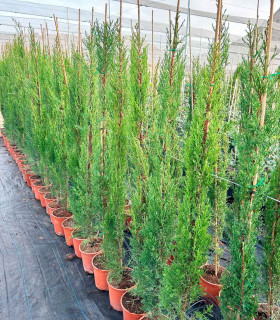
The common cypress is a conifer native to the eastern Mediterranean countries, with a columnar, narrow, and compact shape, and a deep green color. It has a round fruit 2-3 cm in diameter.
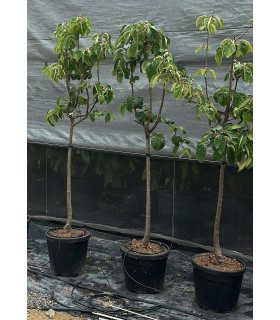
The plum tree is a small tree that rarely exceeds 6-7 m in height; hardy, it adapts to the most diverse climates and can be successfully grown in all regions of Spain, Italy and France.
Pot: 9L / 150-200 cm
Deciduous tree, which can reach a height of 5-8 m., with the crown spread.
Pot: 10L / 160-180 cm
The peach tree was already being cultivated 4000 years ago in China; it crossed Persia and later reached the countries of the Mediterranean basin, and the Romans also spread it beyond the Alps.
Pot: 10L / 180-200 cm
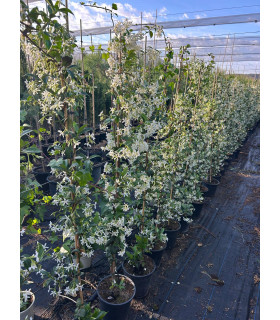
Star Jasmine, Rhyncospermum jasminoides or Trachelospermum jasminoides, is the perfect choice. With its delicate, star-shaped white flowers and intoxicating fragrance, this plant has become a classic for gardens and balconies.
Please sign in first.
Sign in