
Strelitzia or Strelitzia Augusta

Various sizes

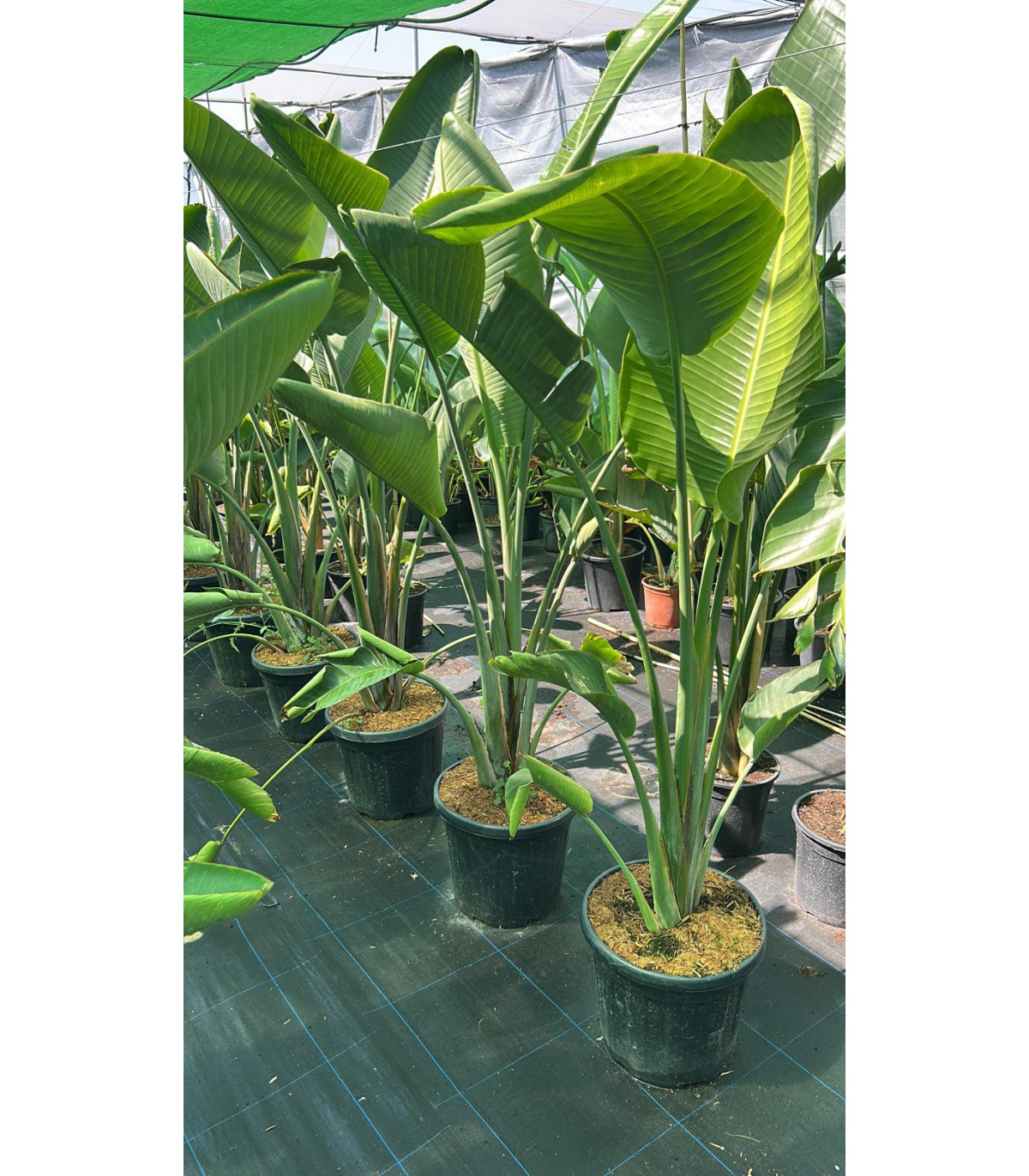
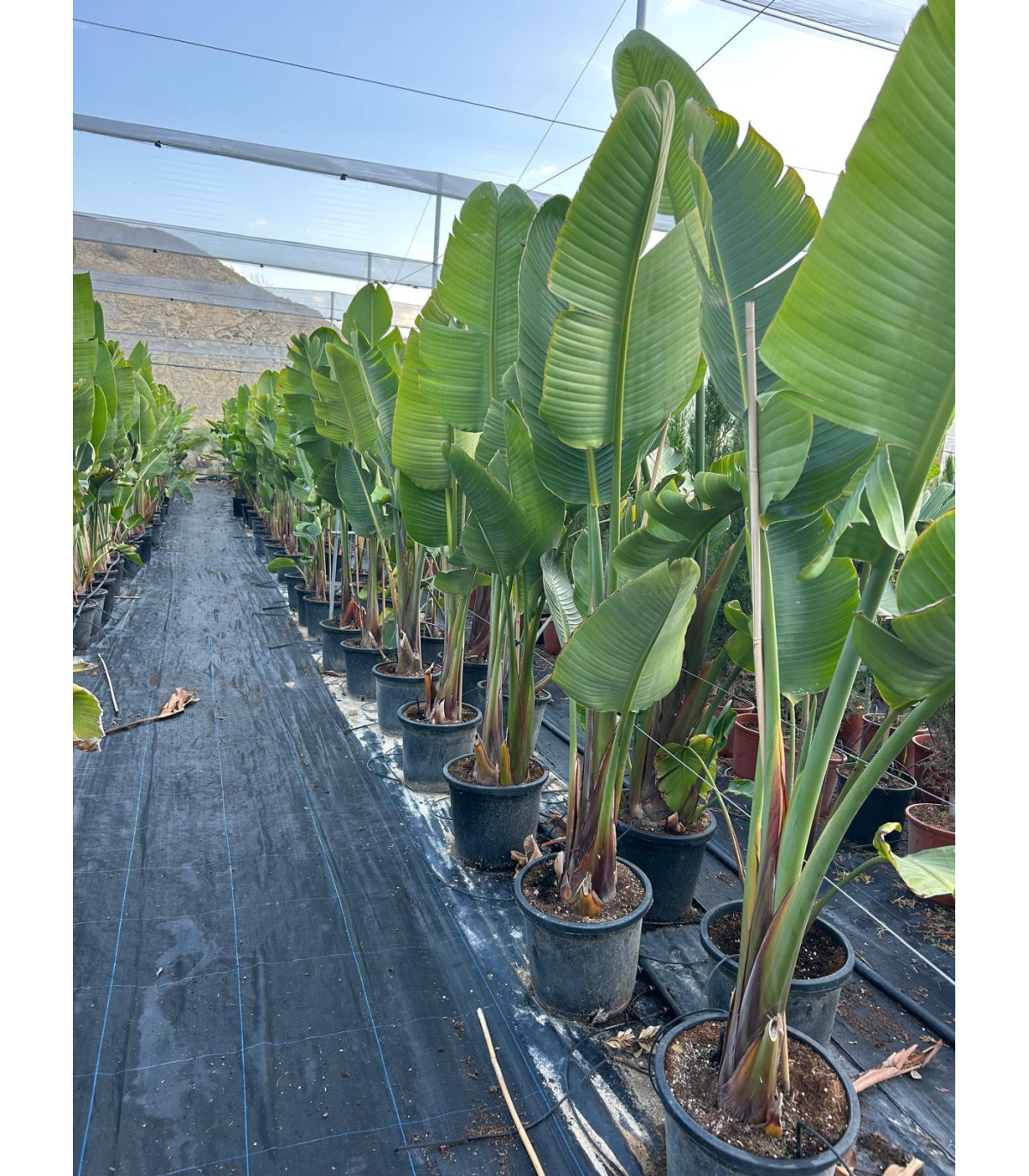
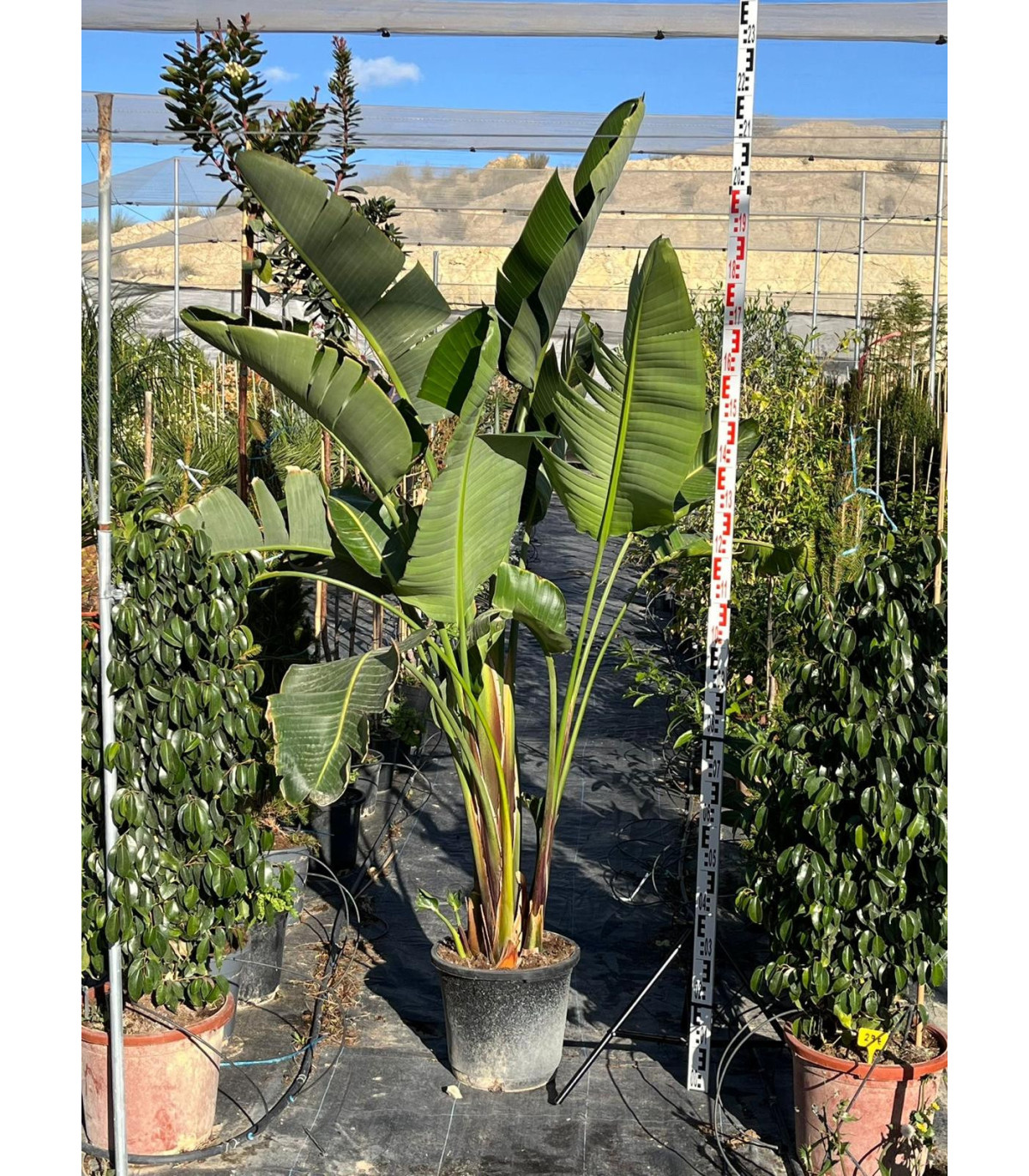
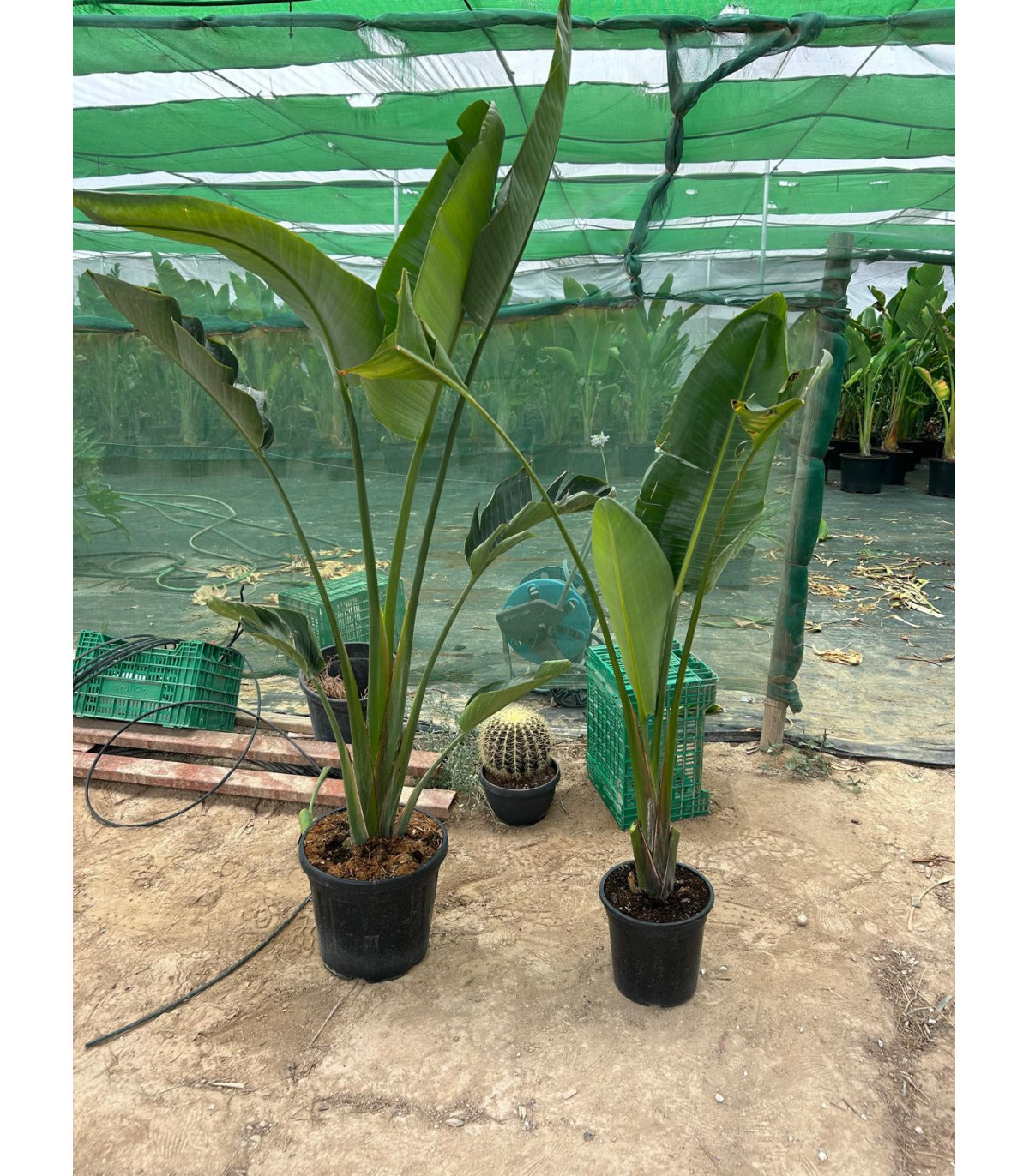
The Strelitzia Augusta, also known as the White Bird of Paradise, is a plant native to South Africa that stands out for its exotic beauty. Its large, oval, deep green leaves, with a prominent central vein, give it an elegant, tropical appearance.

Read moreShow less
€71.50 (tax incl.)
Size
  • 10 liters / 140-160 cm
  • 10 liters / Height: 80-100 cm
  • 25 liters / 180-200 cm
  • 30 litros / 240-260 cm
  • 45 litros / 240-260 cm
  • 55 litros / 260-280 cm
Reference:
Description

The Strelitzia Augusta, also known as the White Bird of Paradise, is a plant native to South Africa that stands out for its exotic beauty. Its large, oval, deep green leaves, with a prominent central vein, give it an elegant, tropical appearance.

Characteristics:

  • Size: It can reach up to 3 meters in height in its adult stage.
  • Leaves: They are leathery, bright green, and have a long petiole. They have a wavy edge and a rough texture.
  • Flowers: They are white with a touch of blue, triangular in shape, and have a long, curved beak. They resemble the crest of a bird of paradise, hence their common name.
  • Flowering: It blooms in summer, although it can do so at other times of the year under optimal conditions.
  • Climate: Prefers warm and temperate climates. Does not tolerate frost.
  • Light: It needs plenty of sunlight to grow and bloom.
  • Soil: It must be well-drained and rich in nutrients.
  • Watering: Moderate, allowing the soil to dry between waterings.
  • Maintenance: It is a relatively easy plant to care for.

Benefits:

  • It adds a tropical touch to any space.
  • It purifies the air.
  • It is a long-lived plant.
  • It requires little maintenance.

In short, the Strelitzia Augusta is an ideal plant for those looking to add a touch of exoticism and elegance to their home. It's a hardy and easy-to-care-for plant that will bring you years of enjoyment.

Read moreShow less
Product Details
Reviews
No comments
Comments (0)
Customers who bought this product also bought:
Various sizes
€47.30 (tax incl.)

The Chamaerops humilis, commonly known as the dwarf palm, is the ideal choice. Native to the Mediterranean region, this species has earned a prominent place in gardening for its hardiness and beauty.
€15.00 (tax incl.)

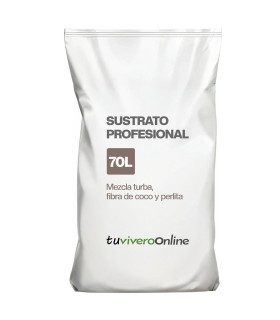
70-liter bag of professional substrate, ideal for high-yield cultivation. Composed of a balanced mix of peat, coconut fiber, and perlite, it guarantees excellent drainage, moisture retention, and aeration for optimal root development.

Various sizes
€60.50 (tax incl.)

The Phoenix roebelenii, also known as the dwarf palm, is an ideal choice. Its compact size, feathery leaves, and hardiness make it one of the most popular indoor and outdoor plants. In this article, we'll provide you with all the information you need to care for your Phoenix roebelenii and enjoy its beauty for years to come.

€18.70 (tax incl.)

The plum tree is a small tree that rarely exceeds 6-7 m in height; hardy, it adapts to the most diverse climates and can be successfully grown in all regions of Spain, Italy and France.

Pot: 9L / 150-200 cm

Various sizes
€38.50 (tax incl.)

The grapefruit, belonging to the citrus family, is known for its juicy pulp and sweet and sour flavor. It thrives in warm and subtropical climates, where it receives plenty of sunlight.

Various sizes
€49.50 (tax incl.)

The olive tree is much more than a fruit tree. It is a symbol of longevity, wisdom, and peace, capable of beautifying any outdoor space with its majestic stature and evergreen foliage. Its rounded and well-defined crown makes it a focal point in gardens, patios, and terraces, adding a timeless Mediterranean touch.

Various sizes
€38.50 (tax incl.)

From a physiological standpoint, the mandarin tree, belonging to the genus Citrus, exhibits evergreen, glossy, and aromatic leaves. Its root system is shallow, making it suitable for well-drained soils.

€18.70 (tax incl.)

The cultivation of the pear tree as a fruit tree is ancient. The Greek Theophrastus, in his botanical writings, already distinguished between the wild and cultivated species, and Pliny listed 40 varieties cultivated by the ancient Romans.

Pot: 9L / 150-200 cm

You may also like
No items
Menu
Settings