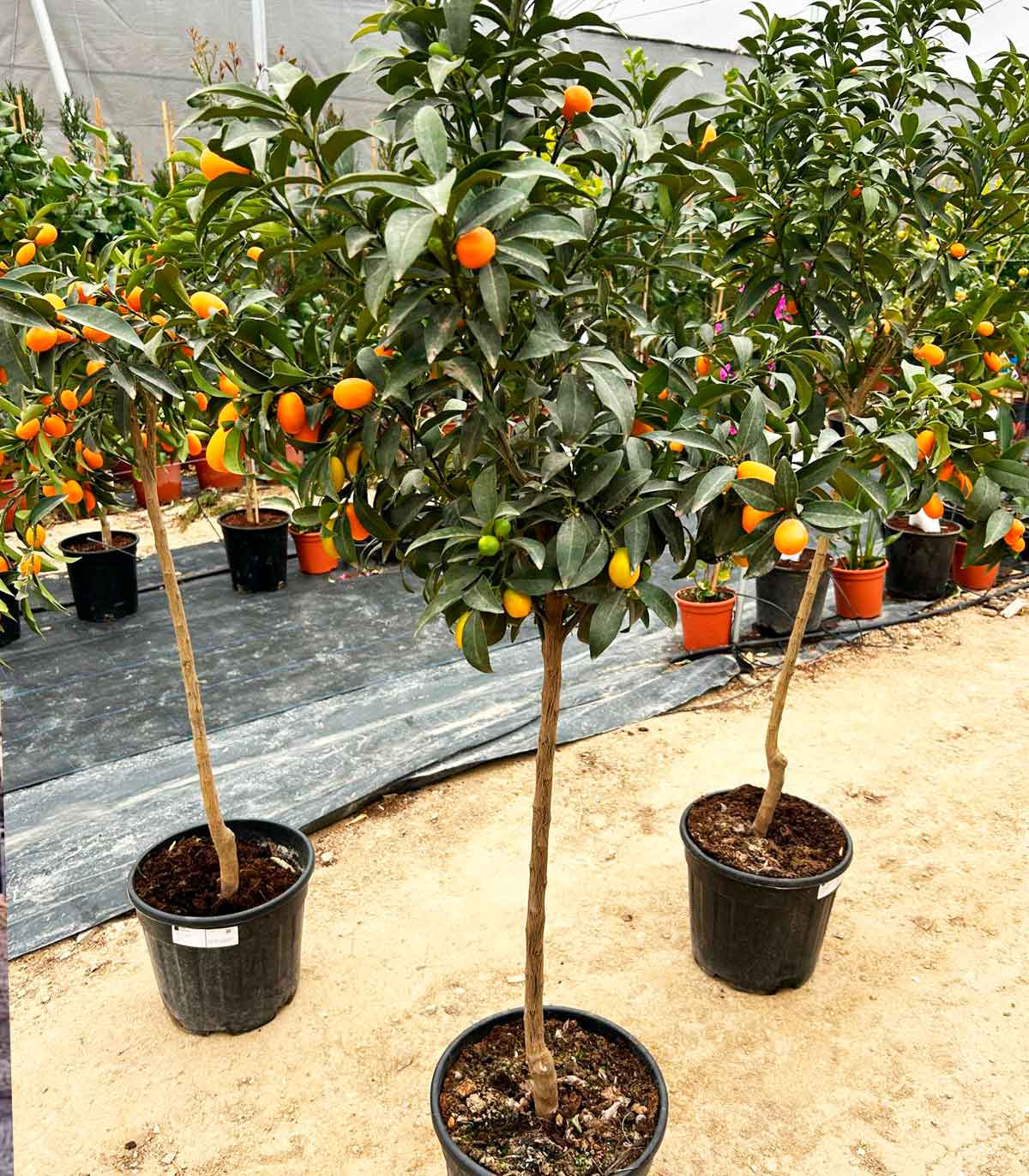
The kumquat, also known as the dwarf orange, is a small fruit tree native to China. It is characterized by its deep, glossy green foliage, composed of leathery, lanceolate leaves that remain on the tree year-round.
In spring, the kumquat tree is adorned with small, fragrant white flowers, which then give way to its characteristic fruit. These are small, oval-shaped citrus fruits, bright orange in color, with a thin, edible peel. Their flavor is a delicious blend of sweet and tart, with a slightly bitter note reminiscent of mandarin oranges.
The kumquat is a versatile plant that can be grown in pots or in the ground. It prefers warm, sunny climates, although it can tolerate slightly cool temperatures. It requires well-drained soil and regular watering, especially during the growing and fruiting stages.
Besides its ornamental value, the kumquat is cultivated for its edible fruit. This fruit can be eaten fresh, or used in jams, preserves, or liqueurs. The kumquat peel is also rich in essential oils, making it useful in perfumery and aromatherapy.
In short, the kumquat is an attractive and easy-to-care-for plant that adds a touch of color and flavor to any space. Its fruits are a source of vitamins and minerals, and its versatility in the kitchen makes it a prized ingredient among gourmets.
Read moreShow less