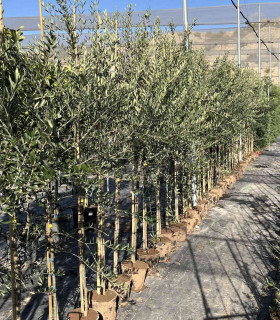
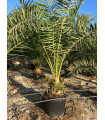


The loquat is a large evergreen shrub or small tree with a rounded crown, native to Japan. Its Latin scientific name is Eriobotrya japonica. It has large leaves, 12-15 cm long.
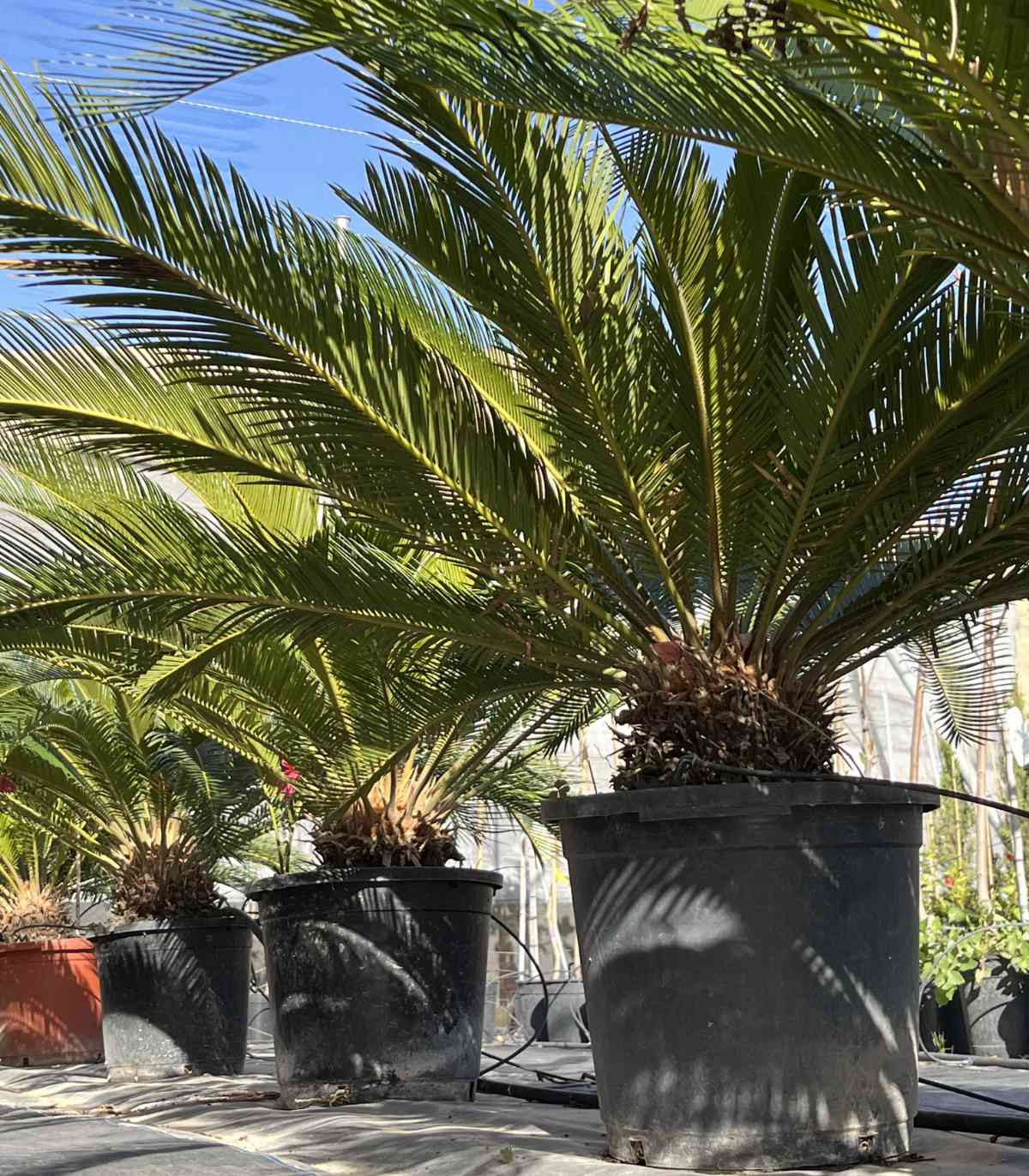
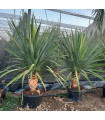
The Cycas revoluta is native to Japan. It is characterized by its columnar trunk, with a striking tuft of evergreen leaves at the top. It frequently produces suckers at the base or shoots along the trunk or branches, with both the suckers and shoots developing into picturesque specimens with multiple trunks or branches.
Cycas revoluta is native to Japan. It is characterized by its columnar trunk with a striking tuft of evergreen leaves at the top. It frequently produces suckers at the base or shoots along the trunk or branches, with both suckers and shoots developing into picturesque specimens with multiple trunks or branches. The pinnate leaves, 1.5 cm or more in length, are slightly arched and composed of 100 or more closely spaced leaflets, each 7-8 cm long; linear, opposite, leathery, pointed, and glossy green. The male inflorescences resemble long, erect cones with a pineapple aroma; the female inflorescences are rosettes of modified, brown leaves covered in dense down. When grown outdoors, it prefers fertile, moist, well-drained soil in a sunny location sheltered from the hottest part of the sun. When potted, it needs to be watered moderately from spring to autumn; during the winter the amount of water or humidity should be reduced.
Physiological and cultivation characteristics:
- It can reach a height of 2.5 to 3 meters and a width of 2 to 3 meters.
- It belongs to rusticity zone 9.
- It grows very slowly.
- It should be in an area exposed to full sun or partial shade.
- Suitable for small gardens.
- It can be grown in pots, planters and flower boxes to decorate terraces, balconies, etc.
- Suitable for planting as a standalone specimen.