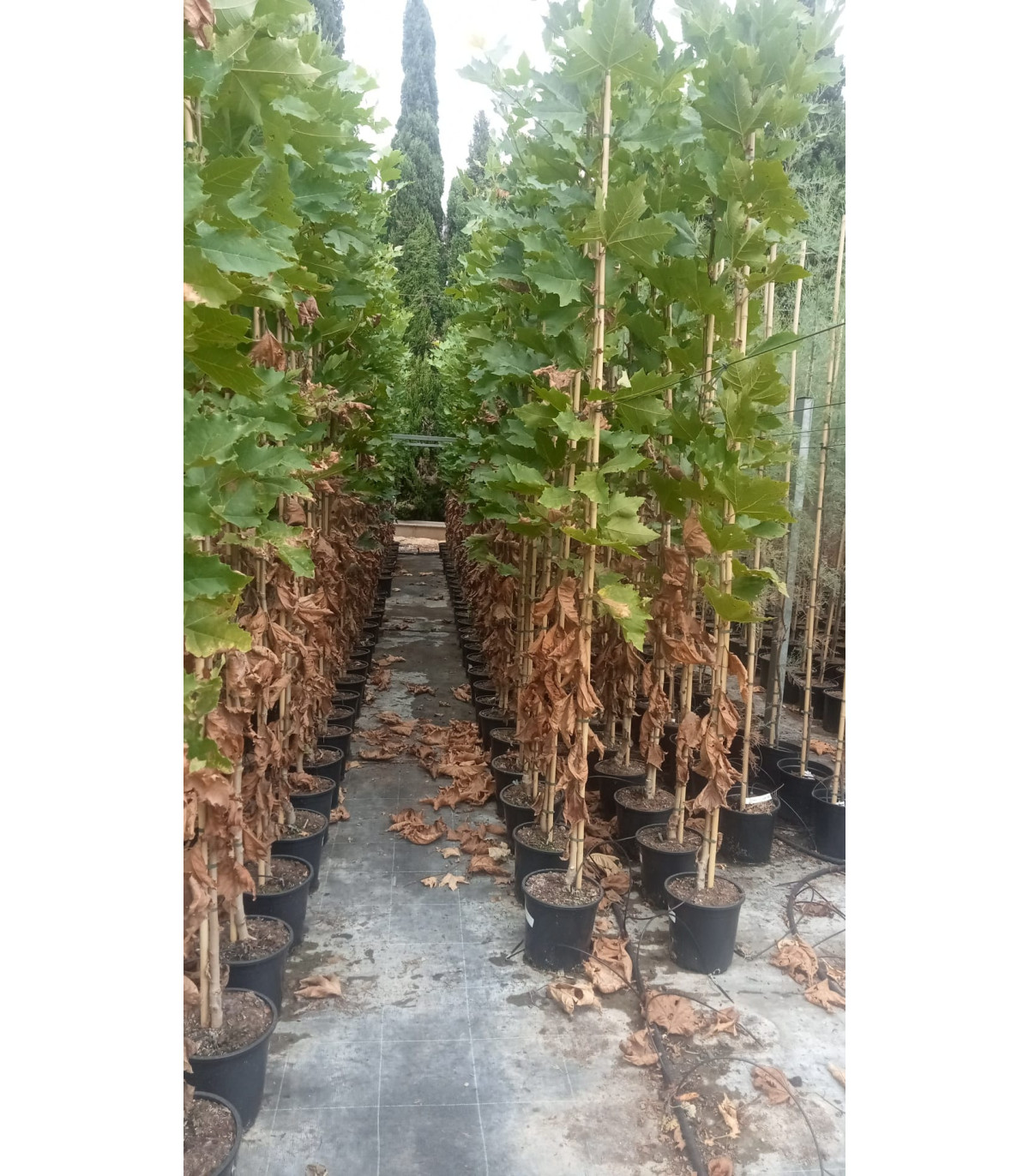
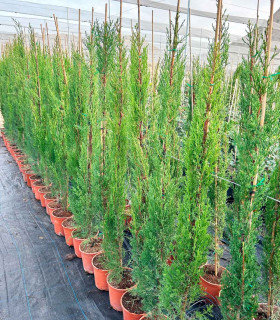

The London plane tree (Platanus x hispanica) is the perfect choice. With its broad canopy and lobed leaves, this tree is a classic in parks and gardens worldwide. In this comprehensive guide, we'll explain everything you need to know about the London plane tree, from its physical characteristics to its care requirements.
Pot: 10L / 300 cm
The London plane tree (Platanus x hispanica) is the perfect choice. With its broad canopy and lobed leaves, this tree is a classic in parks and gardens worldwide. In this comprehensive guide, we'll explain everything you need to know about the London plane tree, from its physical characteristics to its care requirements.
Characteristics of the London plane tree
The London plane tree is a large deciduous tree that can reach heights of up to 40 meters and has a leafy canopy that provides very pleasant shade during the hottest months. Its bark is one of its most distinctive features, as it peels off in large plates, revealing a greenish or whitish trunk.
- Leaves: Large, lobed and palmate, of an intense green color.
- Flowers: Small and inconspicuous, grouped in spherical heads.
- Fruits: Small achenes grouped in hairy spheres.
Benefits of planting a London plane tree
- Abundant shade: Ideal for creating shaded areas in gardens and patios.
- Air purification: Helps improve air quality by absorbing CO2 and releasing oxygen.
- Ornamental value: Its majestic stature and dense foliage make it a highly valuable decorative element.
- Resistance: It is a tree that is very resistant to pollution and disease.
Care of the London plane tree
The London plane tree is a relatively easy tree to care for, but it does require some basic care to grow healthy and strong.
- Location: Prefers sunny or partially shaded places.
- Soil: It adapts to all types of soil, although it prefers fertile and well-drained soils.
- Watering: It needs regular watering, especially during the first few years of life.
- Pruning: Pruning is mainly done to control its growth and remove dry or diseased branches.
- Fertilization: It is recommended to fertilize once a year with an organic fertilizer.