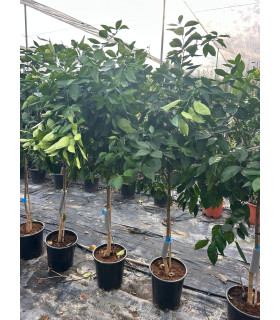

The Eureka Lemon Tree is known for its ability to adapt to various climatic conditions, making it the perfect choice for those who want to enjoy fresh lemons regardless of the season.
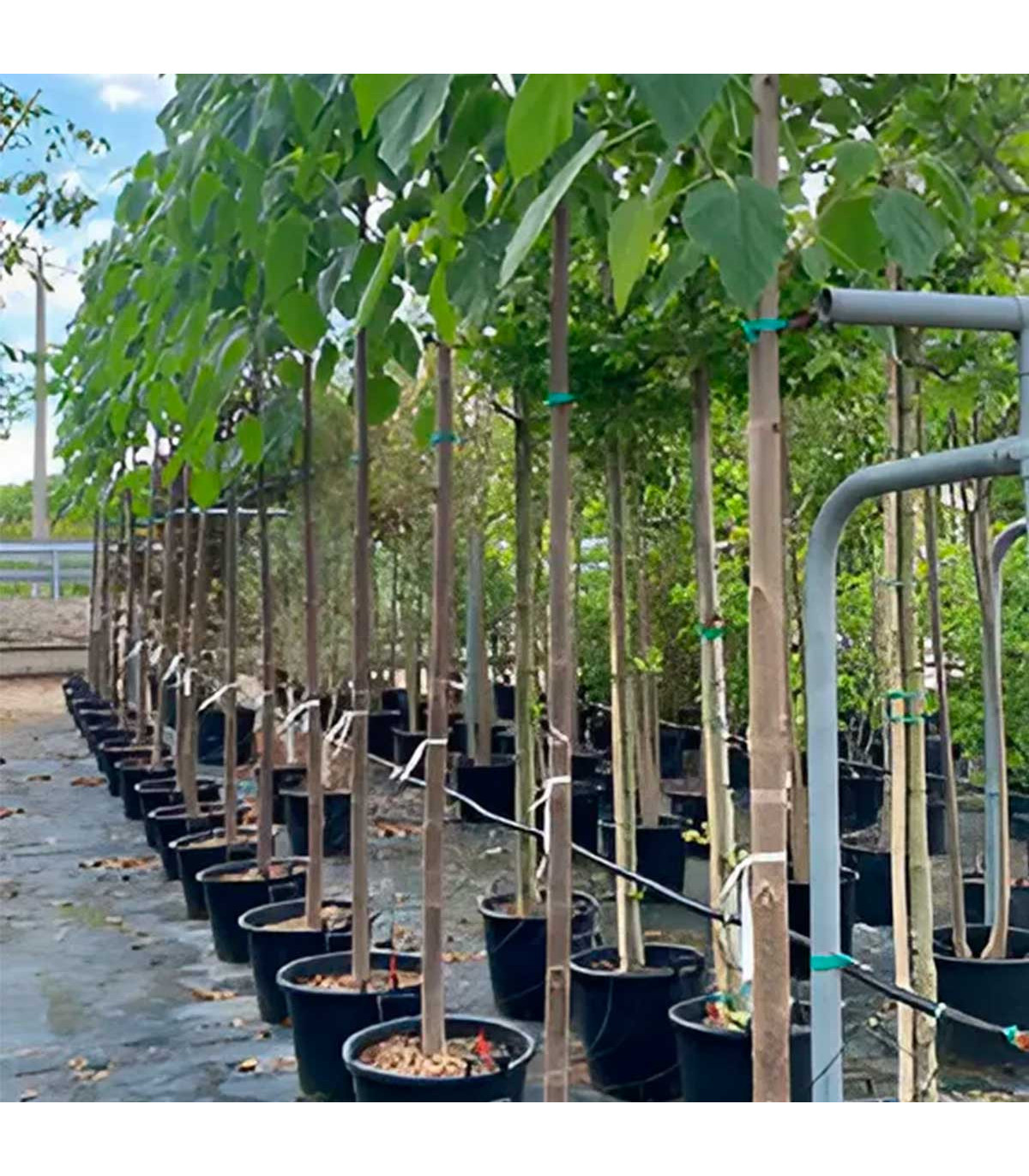
The Paulownia, also known as the empress tree or kiri, is an excellent choice. Native to Asia, this species has become very popular worldwide for its impressive characteristics and ease of cultivation.
Pot: 9L / 300 cm
The Paulownia, also known as the empress tree or kiri, is an excellent choice. Native to Asia, this species has become very popular worldwide for its impressive characteristics and ease of cultivation.
Characteristics of Paulownia
The Paulownia is a fast-growing deciduous tree that can reach considerable heights in just a few years. Its leaves are large, heart-shaped, and a deep green. One of its most striking features is its spectacular spring bloom, with large panicles of tubular lilac or white flowers that perfume the air.
- Fast growth: The Paulownia is known for its fast growth, making it an ideal choice for those who want to obtain a large tree in a short time.
- Adaptability: It adapts to a wide variety of soils and climates, although it prefers well-drained soils and sunny exposures.
- Resistance: It is resistant to drought and pollution, making it ideal for urban gardens.
- Deep roots: Its deep root system helps prevent soil erosion.
- High-quality wood: Paulownia wood is lightweight, strong, and easy to work with, so it is used in the manufacture of musical instruments, surfboards, and other products.
Paulownia Care
The Paulownia is a relatively easy tree to care for, but it requires some basic care to ensure its proper development:
- Watering: During the first few years, it is important to water regularly, especially during periods of drought. Once established, the Paulownia is quite drought-resistant.
- Pruning: Pruning is mainly done to control its shape and size, and to remove dry or diseased branches.
- Fertilization: Annual fertilization with an organic fertilizer will promote its growth and flowering.
- Pests and diseases: Paulownia is resistant to most pests and diseases, but can be affected by some insects and fungi in excessively humid conditions.
Uses of Paulownia
Paulownia has multiple uses, both ornamental and practical:
- Gardening: It is used as an ornamental tree in parks, gardens and avenues.
- Reforestation: It is an excellent option for reforestation projects, thanks to its rapid growth and ability to adapt to different soils and climates.
- Wood production: Its light and resistant wood is used in the manufacture of furniture, musical instruments, surfboards and other products.
- Paper production: Paulownia wood pulp is used to manufacture high-quality paper.
- Honey production: Its flowers attract bees, so it is used in honey production.