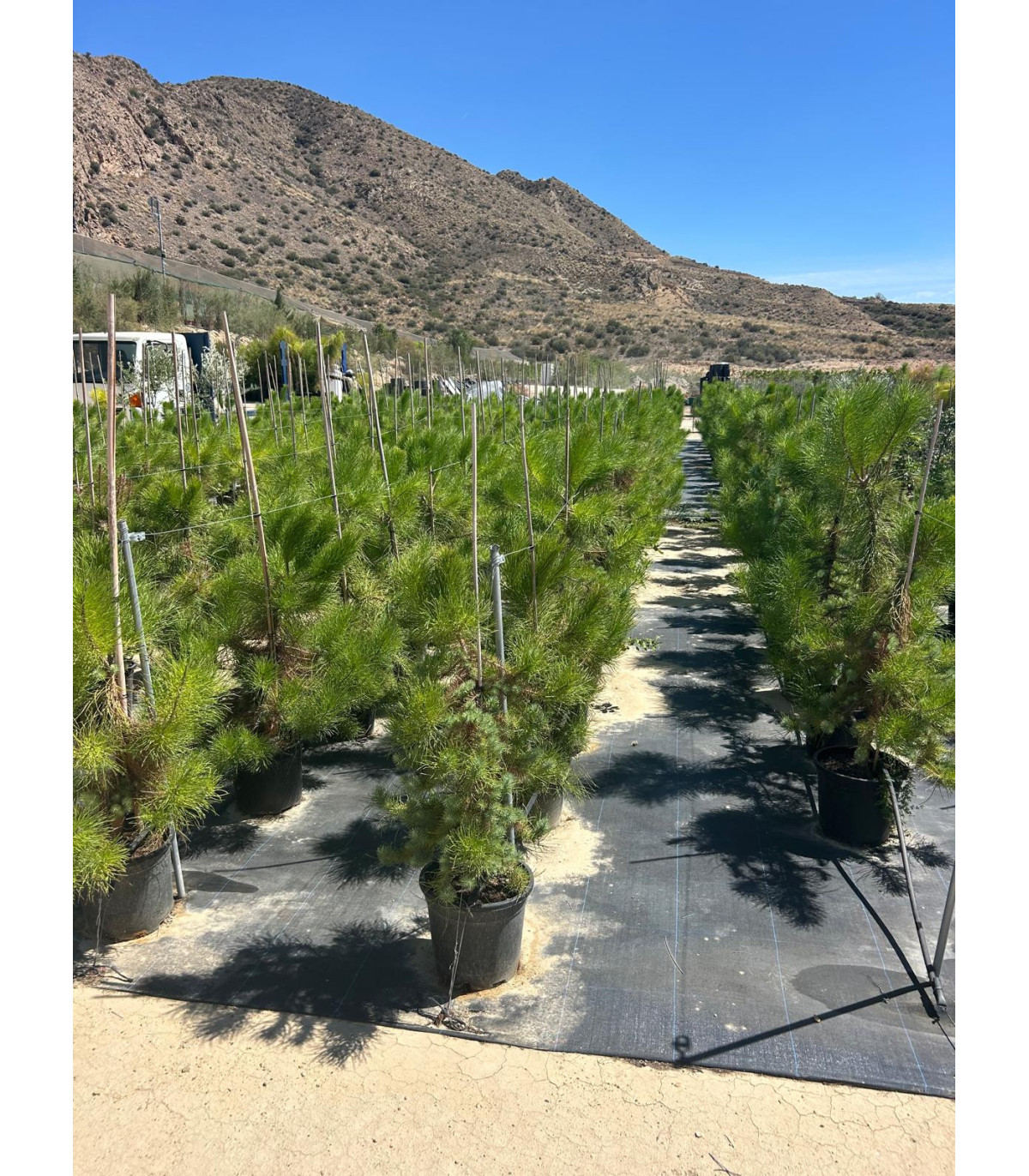
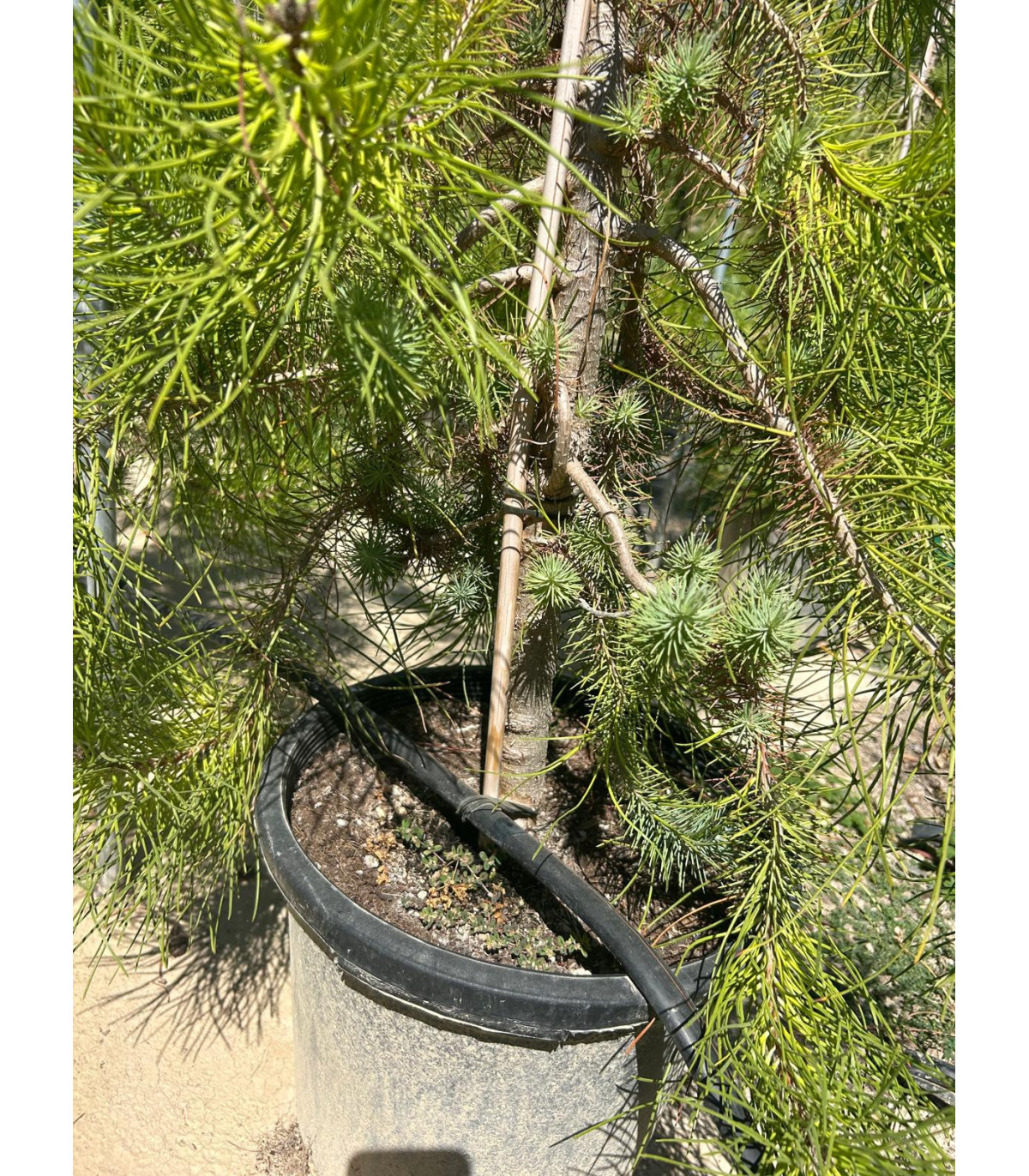
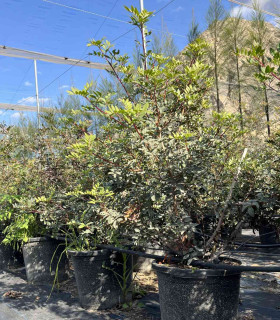
A majestic conifer, unmistakable for its umbel-like crown, a symbol of Mediterranean flora. It arrived on our peninsula from Crete and Asia Minor. It has a straight, cylindrical trunk with broad, reddish-brown and gray bark, furrowed longitudinally. Even in young plants, the crown is globose and formed of terminal branchlets turned upwards, seemingly multiplying continuously to block the light; over the years, it flattens and widens, self-pruning the lower branches without leaving scars.
Needle-like leaves 8-20 cm long, in pairs, dark green, slightly twisted, slightly prickly.
Cones (called pinecones): 8-15 cm long and 7-10 cm wide, heavy and spherical, shiny reddish-brown in color; they mature at 3 years and once mature, they drop the seeds (the famous edible pine nuts, widely used in gastronomy and pastry making) protected by a woody shell.
The stone pine is drought resistant and indifferent to soil pH.
Physiological and cultivation characteristics:
- It can reach a height of 15 to 25 meters and a width of 6 to 15 meters.
- It belongs to the 7B rusticity zone.
- It has a medium growth rate.
- It must be in an area exposed to full sun.
- Suitable for large parks and gardens.
- Suitable for the formation of patches and groves when combined with other species.
- It can be planted individually but is also suitable for forming groups (more plants of the same variety).
- Suitable for tree plantings in streets, boulevards, squares and wide roads.
- Wind resistant.
- Resistant to atmospheric pollution.
- It withstands the sea.
Read moreShow less