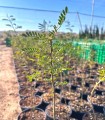
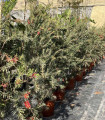
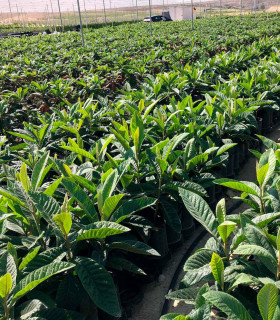

The olive tree originated in the Mediterranean basin. It is an evergreen tree, among the longest-lived in existence (2000 years), which very slowly reaches 9 meters in height and 5-7 meters in width, and more if it finds the space.
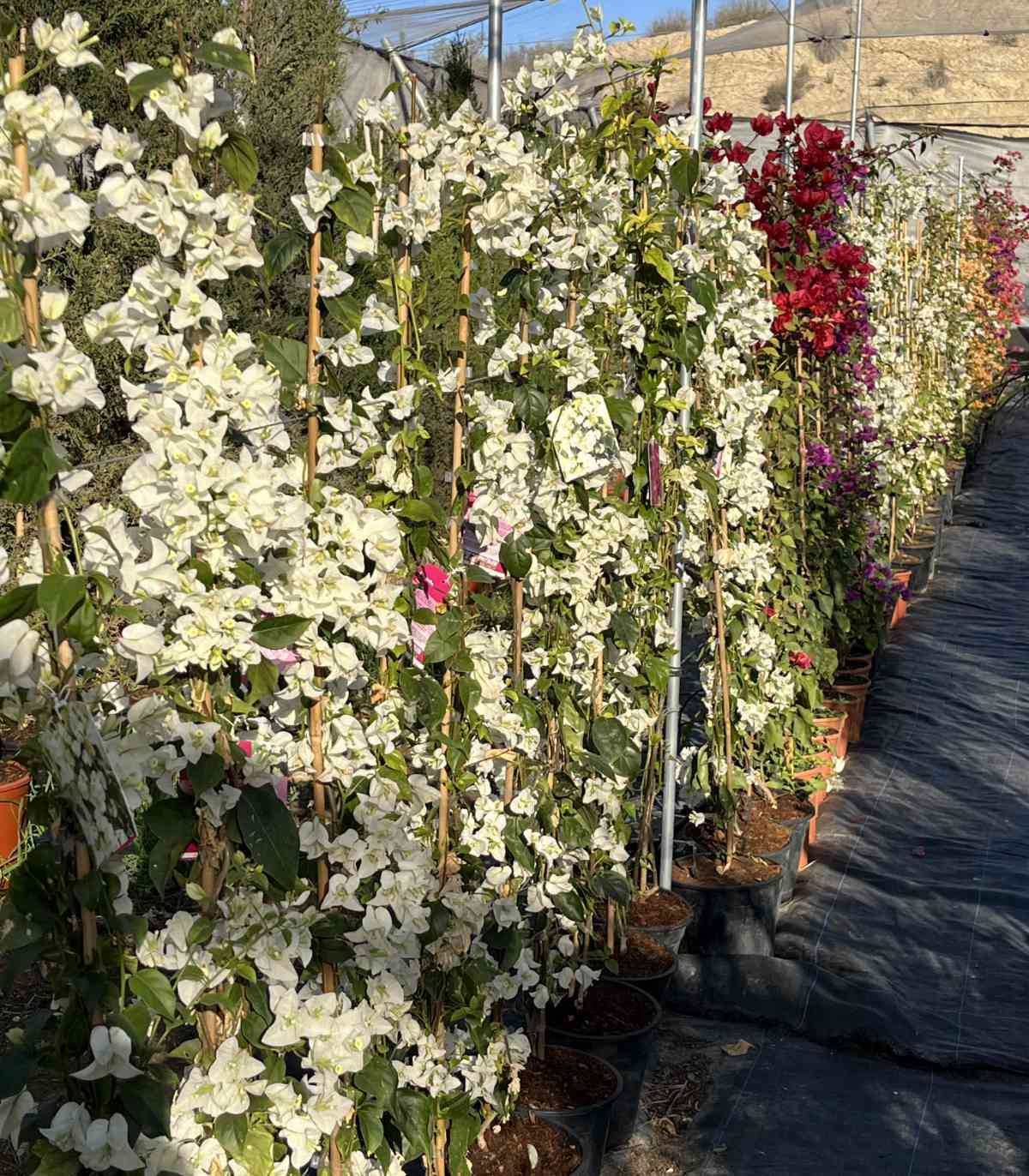
A genus comprising vigorous climbing shrubs with long, more or less thorny branches. The leaves are alternate and entire, and the small, almost insignificant white flowers are surrounded by three large, vividly colored bracts that constitute their true beauty and remain on the plant throughout the warm months, from June to October; afterwards, they turn green, dry out, and become papery.
This genus comprises vigorous climbing shrubs with long, more or less thorny branches. They have alternate, entire leaves and small, almost insignificant white flowers surrounded by three large, brightly colored bracts that constitute their true beauty. These bracts remain on the plant throughout the warm months, from June to October; afterward, they turn green, dry out, and become papery. Bougainvillea grows rapidly, covering large areas in just a few years. Native to South America (especially Brazil), they have found a particularly favorable habitat in the more moderate Mediterranean climate, and therefore also grow well in the lake regions of central Italy, where they need sheltered locations. They are also widely cultivated in harsher climates, of course in pots, where they spend the summer outdoors and are brought indoors with the first frosts. Bougainvillea prefers siliceous soils but grows in any garden soil, although waterlogging should be avoided; the ideal location is sunny or partially shaded. If planted in full shade, flowering will be less abundant. It withstands marine climates and tolerates drastic and repeated pruning, making it a good support for shaping small trees, spheres, cones, and, with supports, bonsai.