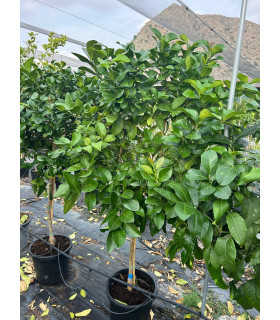
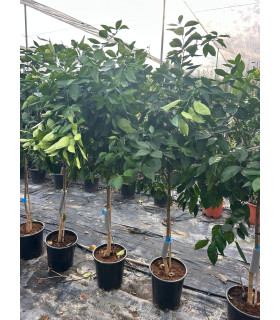
Native to China and India, it is the most widespread species of hibiscus in continental Europe, and the only one that is completely hardy. It is a deciduous shrub, although in temperate climates it can retain its leaves year-round. Densely branched and upright, it doesn't take up much space or grow very large, making it easy to plant in small areas.
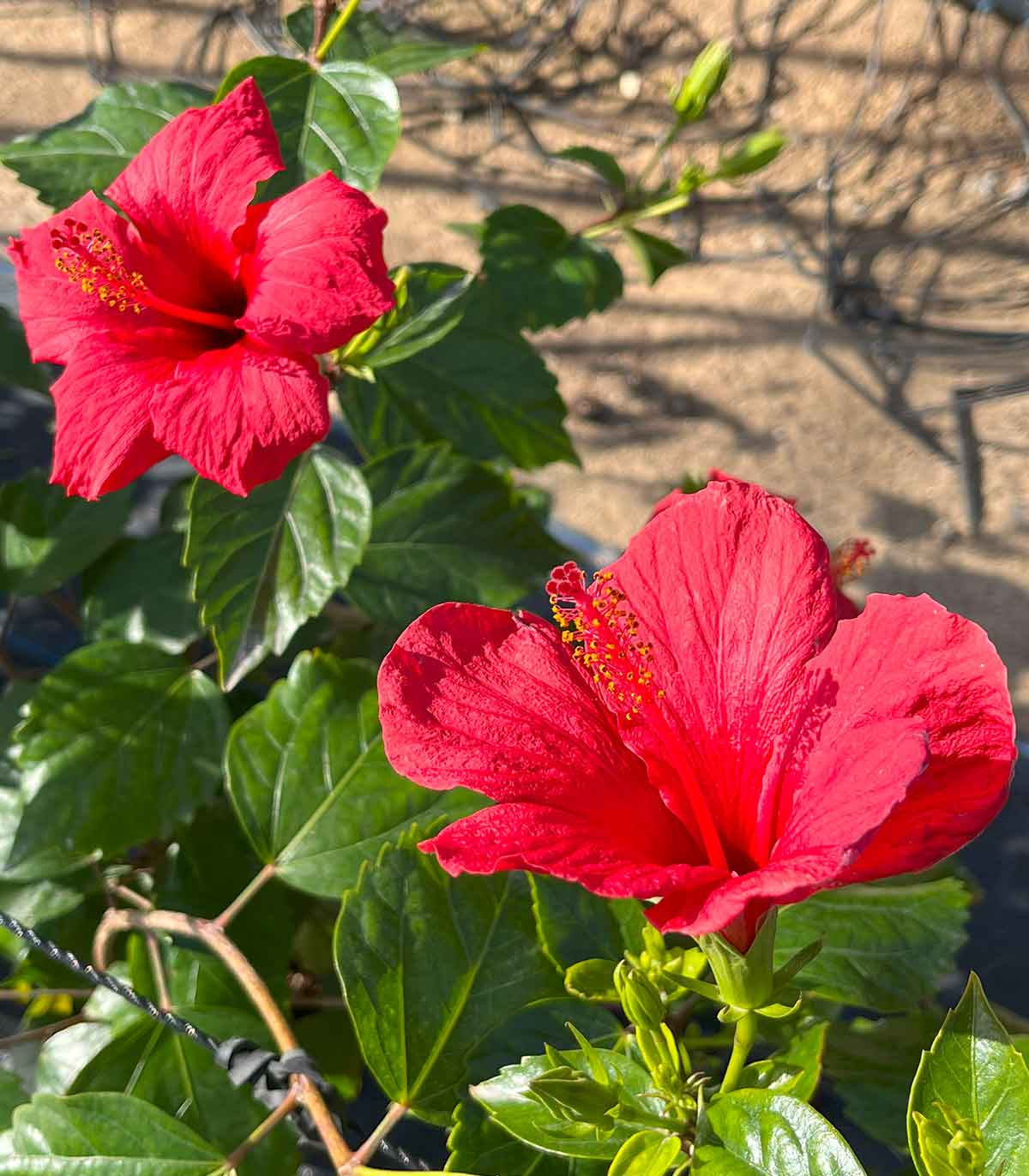
It can be easily shaped halfway up the stem or at the top. Leaves: They exhibit some polymorphism, as they can be triangular, oval, or trilobed, more or less toothed, with a maximum length of 10 cm, and are dark green. Flowers: They appear continuously from June to September in the leaf axils of the current year's branches; they are bell-shaped, approximately 6 cm long, and are composed of petals that can be pink, white, red, or blue, while the center is dark red with long white stamens and yellow anthers.
Fruit: dark gray capsules, about the size of a fingernail, after flowering. Cultivated successfully in northern Italy up to 1000 m altitude. If it suffers severe frost when young, it recovers from the base. It prefers fertile, moderately moist soil.
It requires vigorous pruning in February to encourage the growth of new shoots that will produce flowers.
Physiological and cultivation characteristics:
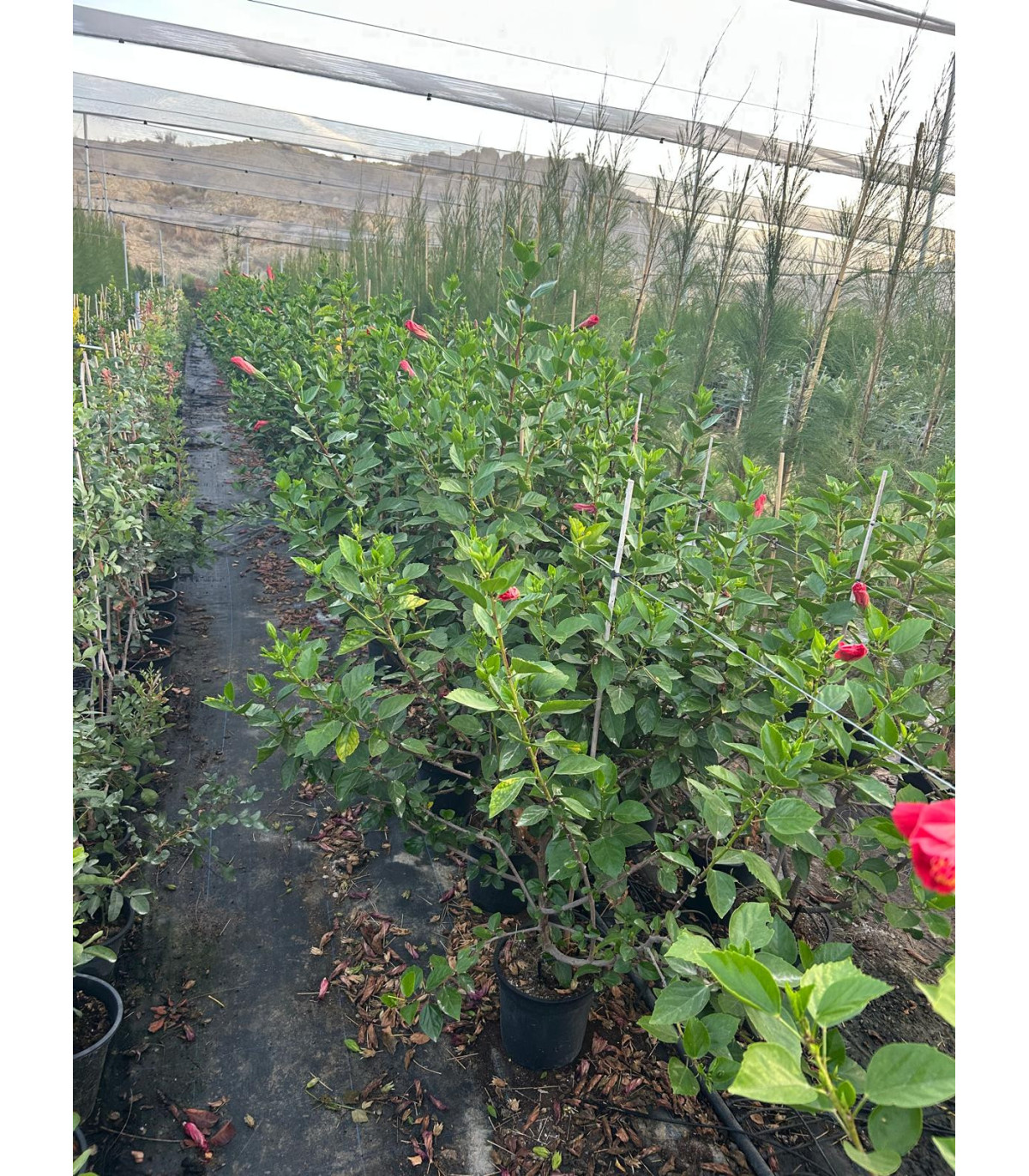
- It can reach a height of 2 to 3.5 meters and a width of 2 to 2.5 meters.
- It belongs to the 7A rusticity zone.
- It has a medium growth rate.
- It should be in an area exposed to full sun or partial shade.
- Suitable for small gardens.
- Suitable for parks or large gardens.
- It can be grown in pots, planters and flower boxes to decorate terraces, balconies, etc.
- It can be planted individually but is also suitable for forming groups (more plants of the same variety).
- Suitable for the formation of patches and groves with other different species.
- Suitable for the formation of free-flowing and flowering hedges.
- It resists pollution.
Read moreShow less