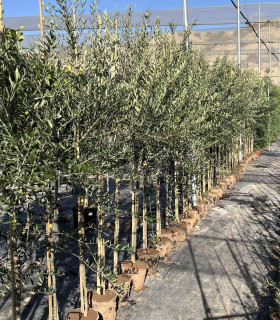

The olive tree originated in the Mediterranean basin. It is an evergreen tree, among the longest-lived in existence (2000 years), which very slowly reaches 9 meters in height and 5-7 meters in width, and more if it finds the space.
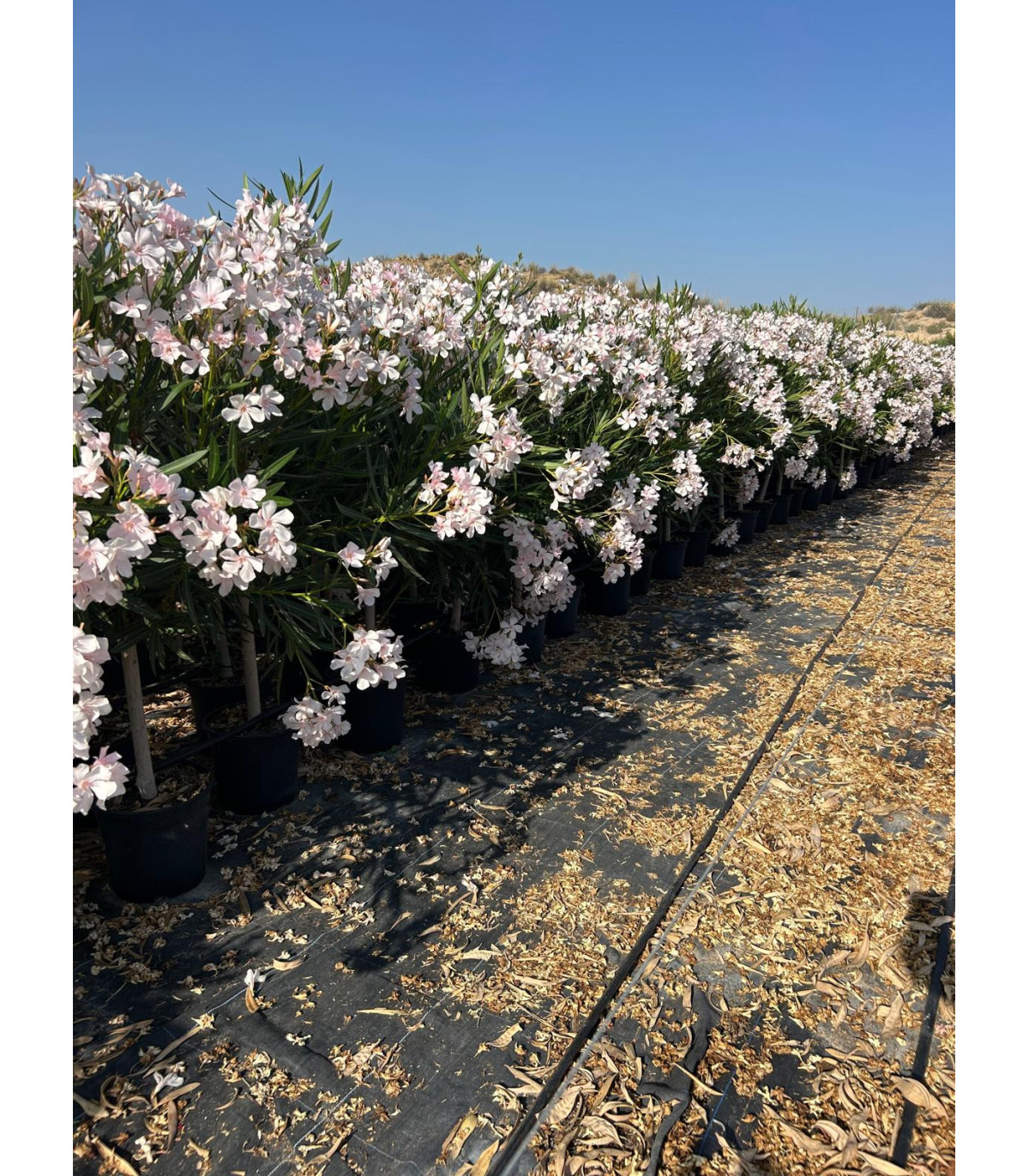
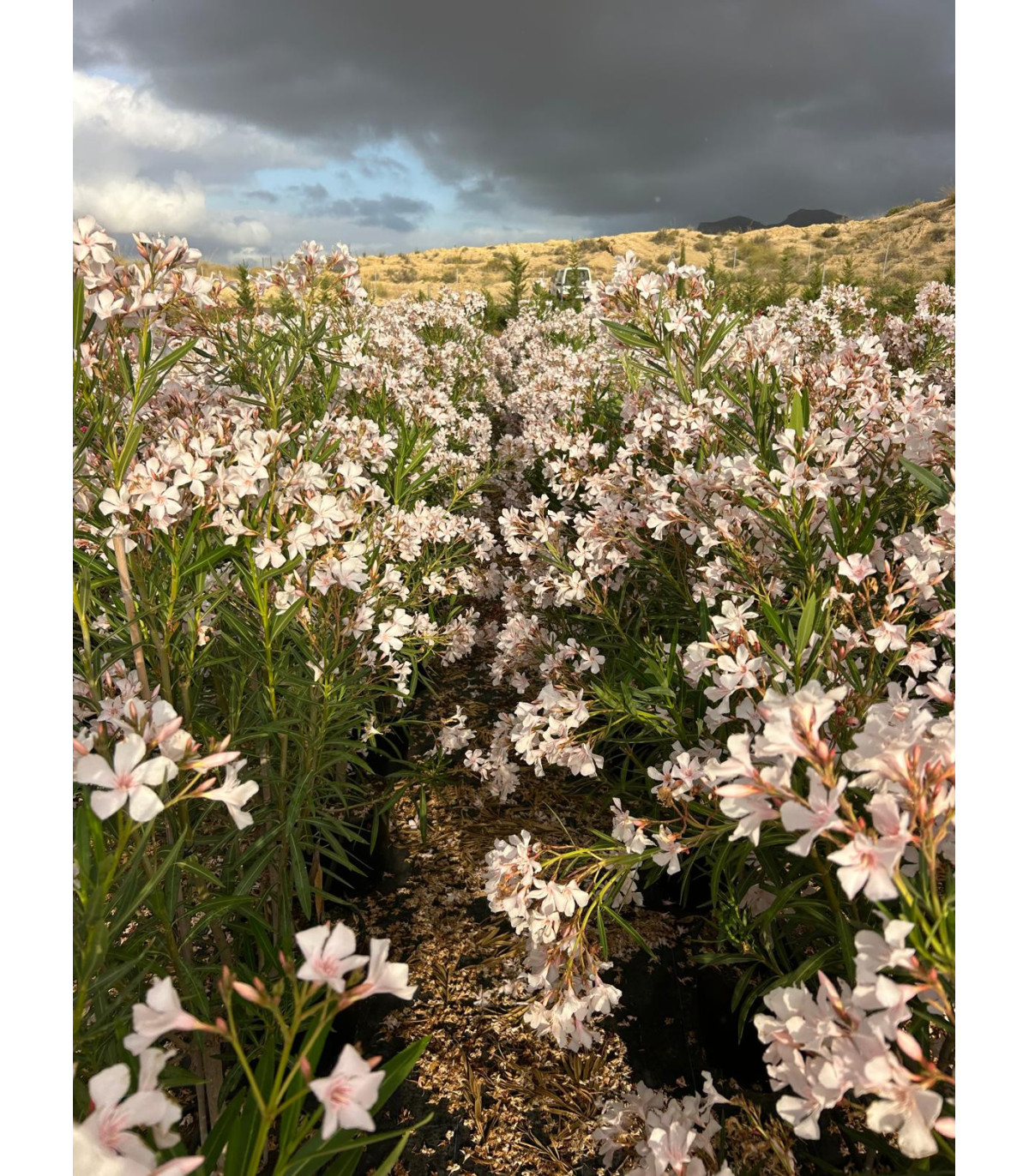
Oleander, also known as rosebay, is native to the Mediterranean basin, Persia, India, and Japan. It is a compact, rounded, evergreen shrub.
Oleander, also known as rosebay, is native to the Mediterranean basin, Persia, India, and Japan. It is a compact, rounded, evergreen shrub. It has become a symbol of the Mediterranean summer, of seaside holidays where it finds its original habitat and where few plants offer such a spectacular and long-lasting bloom. It has evergreen, lanceolate, entire, and rather leathery leaves, arranged in whorls of 2-3, of a medium green color (variegated in some varieties). Its flowers, depending on the variety, can be single or double, fragrant or less fragrant, and come in a wide range of colors; they are clustered in terminal cymes and last throughout the summer. The fruits appear after flowering, in long pods containing woolly seeds. It typically grows in poor soil, but in the garden, it's best planted in well-prepared, fertile soil. If grown in a pot, it should be deeper than it is wide to allow space for its long roots. It doesn't require much water during the winter, but from spring to autumn, it needs plenty of moisture.
Physiological and cultivation characteristics:
- It can reach a height of 3 to 4 meters and a width of 2 to 4 meters.
- It belongs to the 8A rurality zone.
- It is slow-growing.
- It should be in an area with full sun or partial shade.
- Suitable for small gardens.
- Also suitable for large parks or gardens.
- It can be grown in pots, planters and flower boxes to decorate terraces, balconies, etc.
- Suitable for tree plantings in streets, boulevards, squares and narrow roads.
- Resistant to atmospheric pollution.
- It withstands the sea.