


Various sizes
€16.50 (tax incl.)
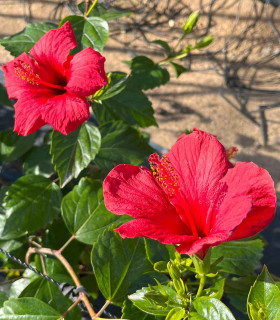
Originally from China and India, it is, within the hibiscus genus, the most widespread species in continental Europe, the only one that is completely rustic.
Pot: 6L / 120-140 cm
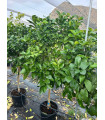
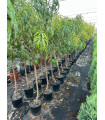
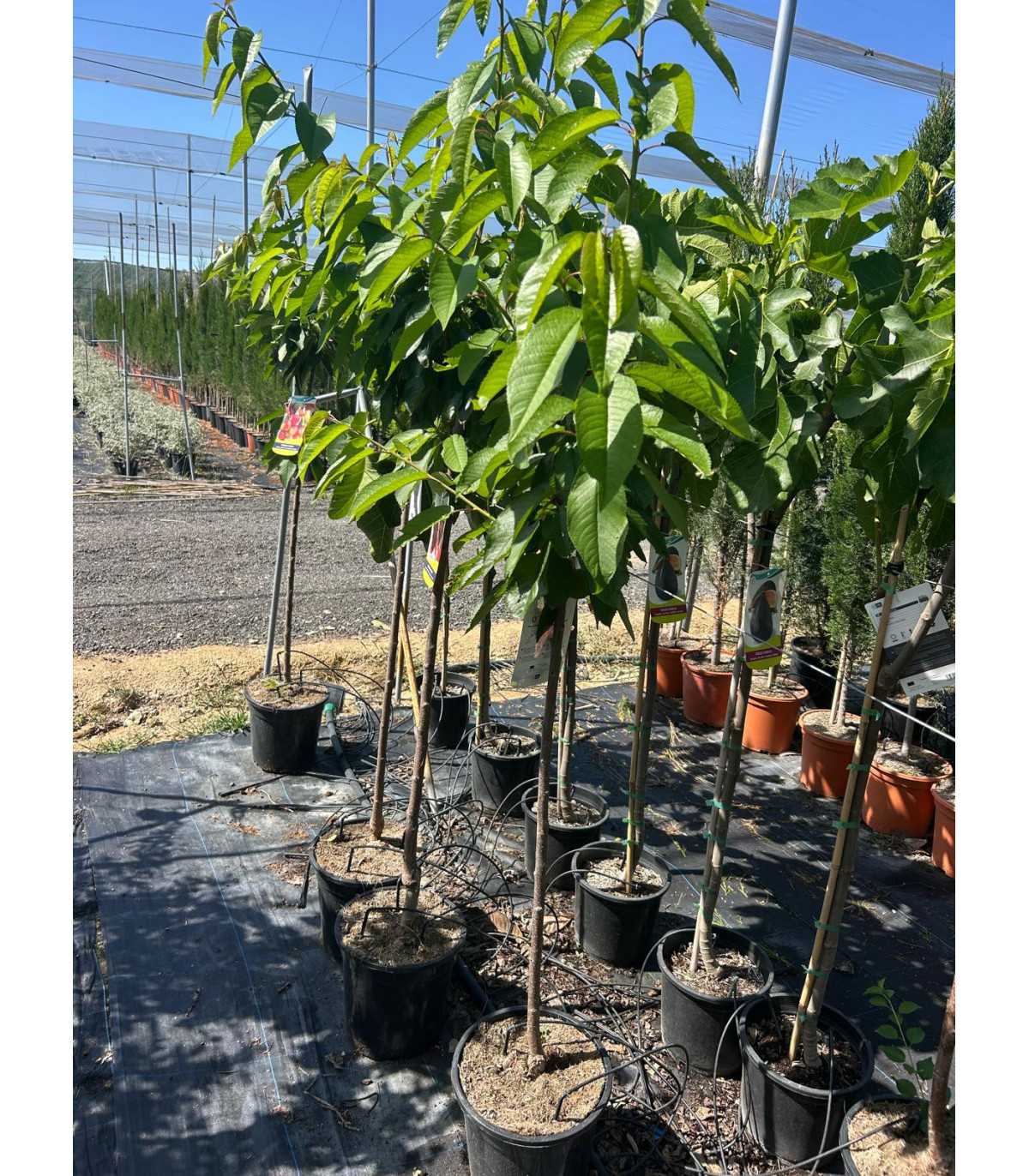
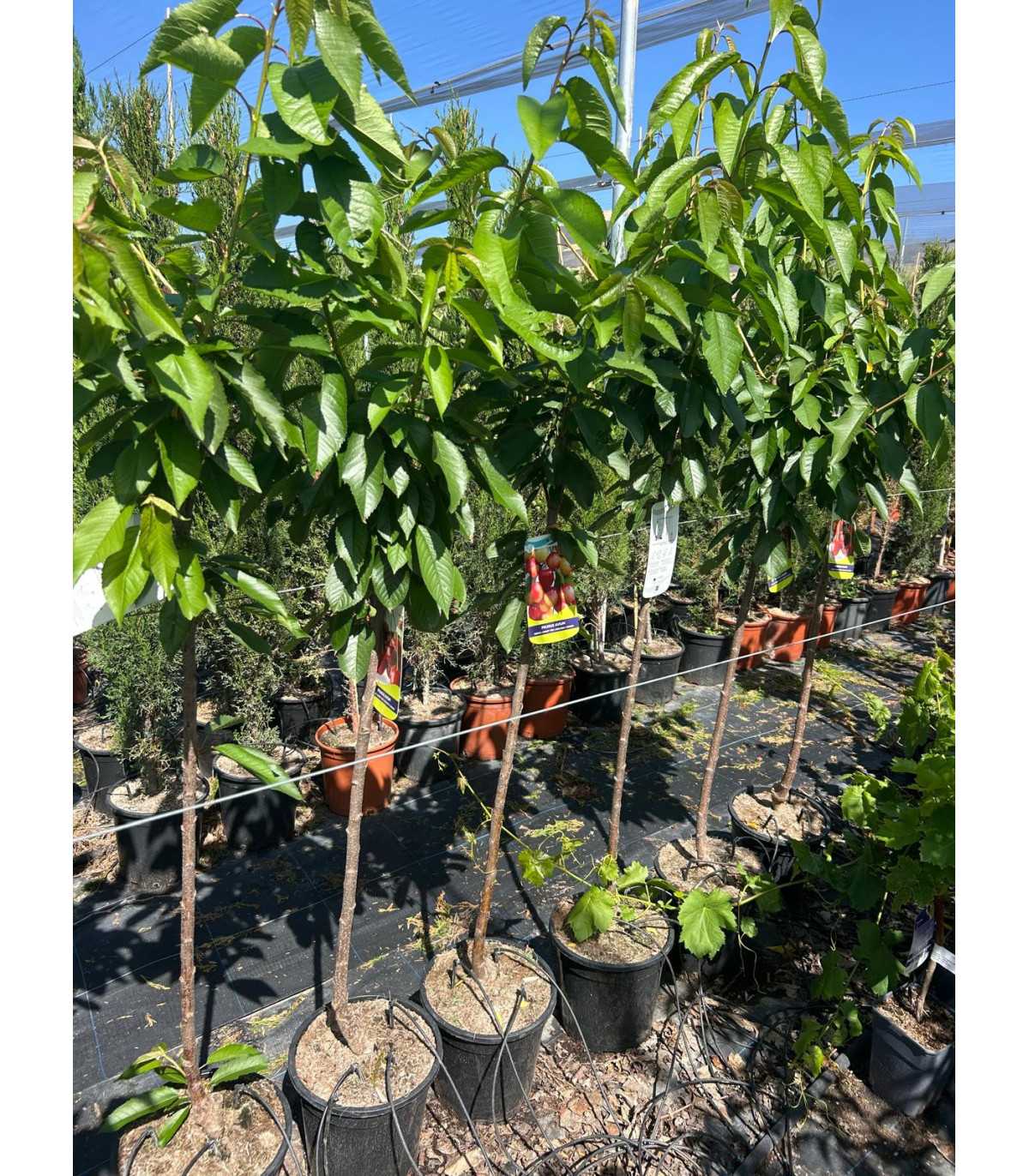
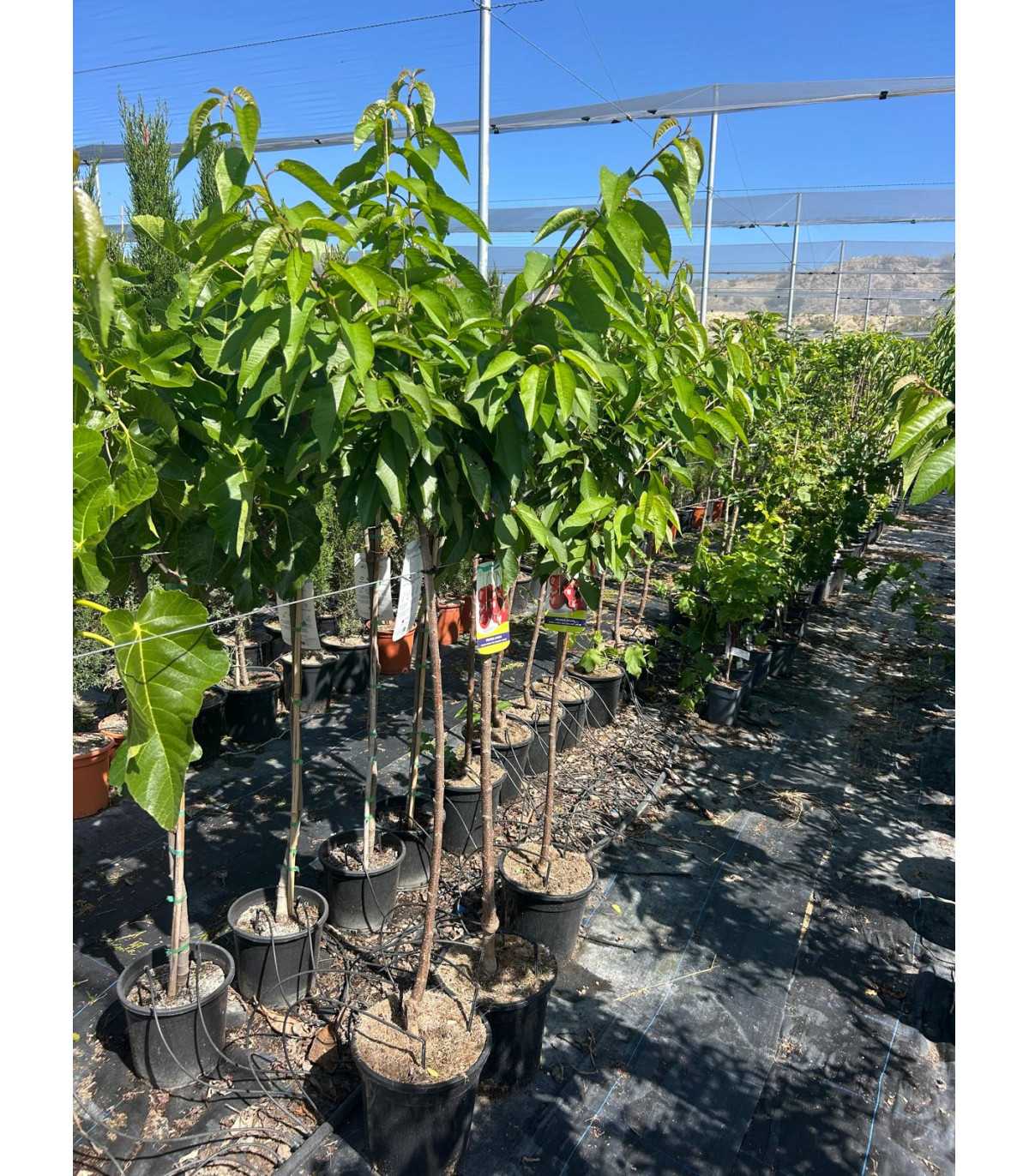
Cherry trees (grafted) that produce the fruits we most enjoy eating freshly harvested are deciduous trees, whose final dimensions are difficult to specify precisely, as they depend on the size, the way it is cultivated, and the variety.
Pot: 9L / 150-200 cm
The (grafted) cherry trees that produce the fruit we most enjoy eating freshly picked are deciduous trees, whose final dimensions are difficult to specify precisely, as they depend on the tree's size, cultivation method, and variety. Most quickly become substantial trees with a trunk that rises straight to the top, covered in a characteristic glossy, chestnut-brown bark that peels off in strips. The leaves are oval, roughly toothed, up to 15 cm long, dark green, and tend to turn yellow or orange in autumn. Spectacular flowering:
Countless clusters of white, simple flowers open in April before the leaves appear. The fruits, prized as food since the Bronze Age, are drupes borne on long stalks; they must be harvested ripe, otherwise they will not ripen further. Besides being eaten fresh, they are also widely used for preserves and in the food industry. Cultivation: The cherry tree adapts well to the warm-temperate and cool-temperate conditions throughout Europe. The most suitable soils are medium-textured, with full sun exposure and good shelter, especially in areas characterized by frequent and heavy rainfall.
Originally from China and India, it is, within the hibiscus genus, the most widespread species in continental Europe, the only one that is completely rustic.
Pot: 6L / 120-140 cm
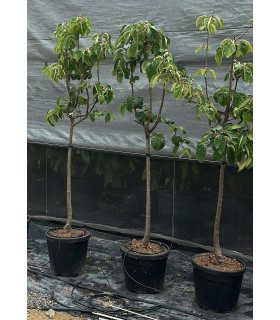
The peach tree was already being cultivated 4000 years ago in China; it crossed Persia and later reached the countries of the Mediterranean basin, and the Romans also spread it beyond the Alps.
Pot: 10L / 180-200 cm
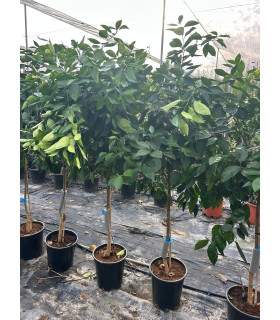
The orange tree (Citrus sinensis) not only captivates with its vibrant fruits and fragrant flowers, but also offers unique physiological benefits.
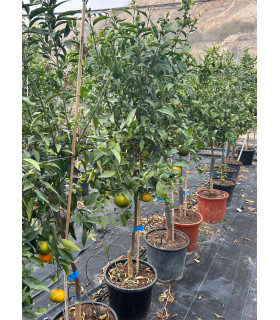
From a physiological standpoint, the mandarin tree, belonging to the genus Citrus, exhibits evergreen, glossy, and aromatic leaves. Its root system is shallow, making it suitable for well-drained soils.
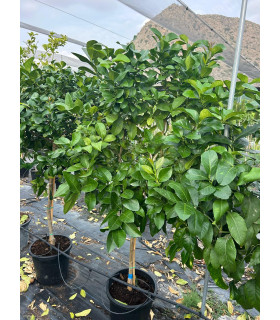
The Eureka Lemon Tree is known for its ability to adapt to various climatic conditions, making it the perfect choice for those who want to enjoy fresh lemons regardless of the season.
The grapefruit, belonging to the citrus family, is known for its juicy pulp and sweet and sour flavor. It thrives in warm and subtropical climates, where it receives plenty of sunlight.
Deciduous tree, which can reach a height of 5-8 m., with the crown spread.
Pot: 10L / 160-180 cm
Please sign in first.
Sign in